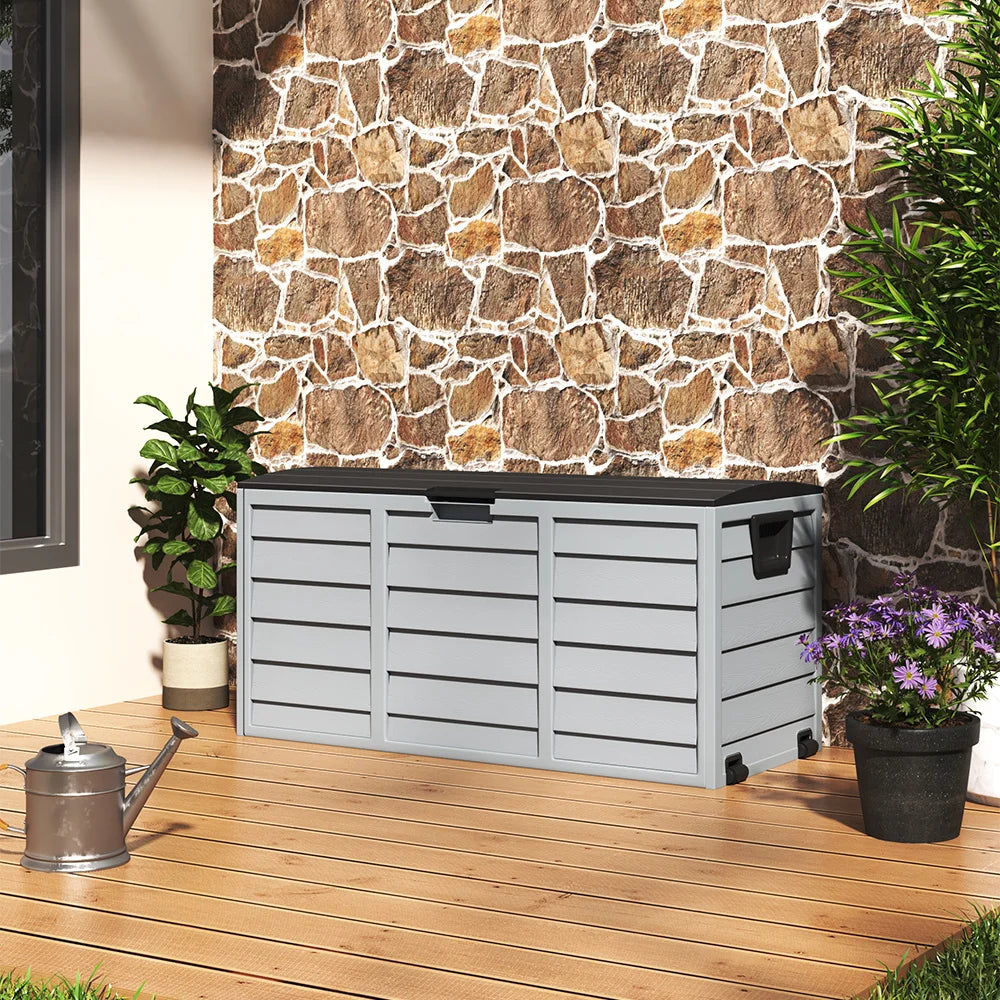
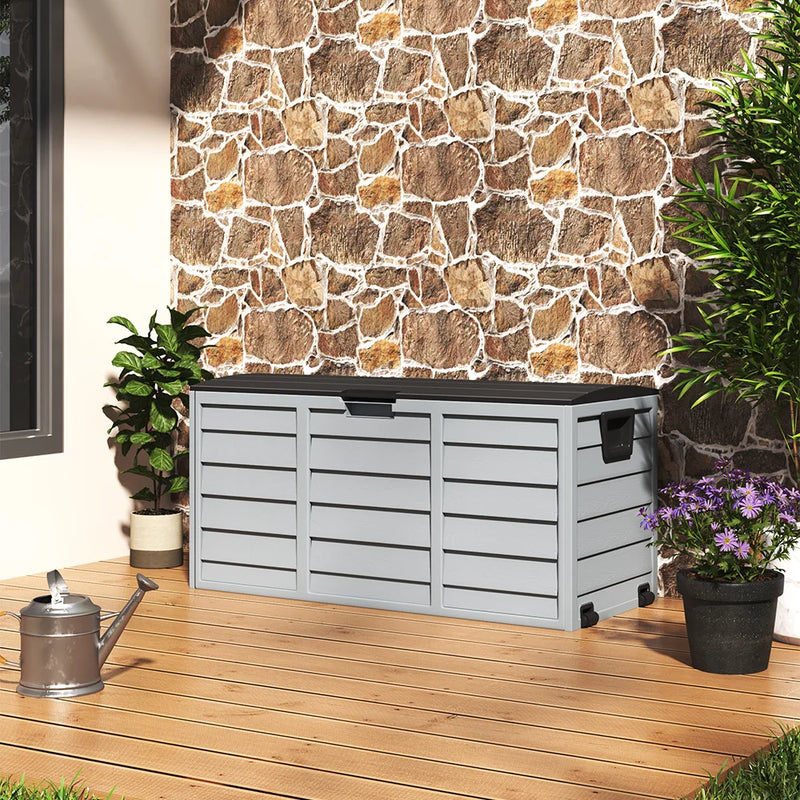
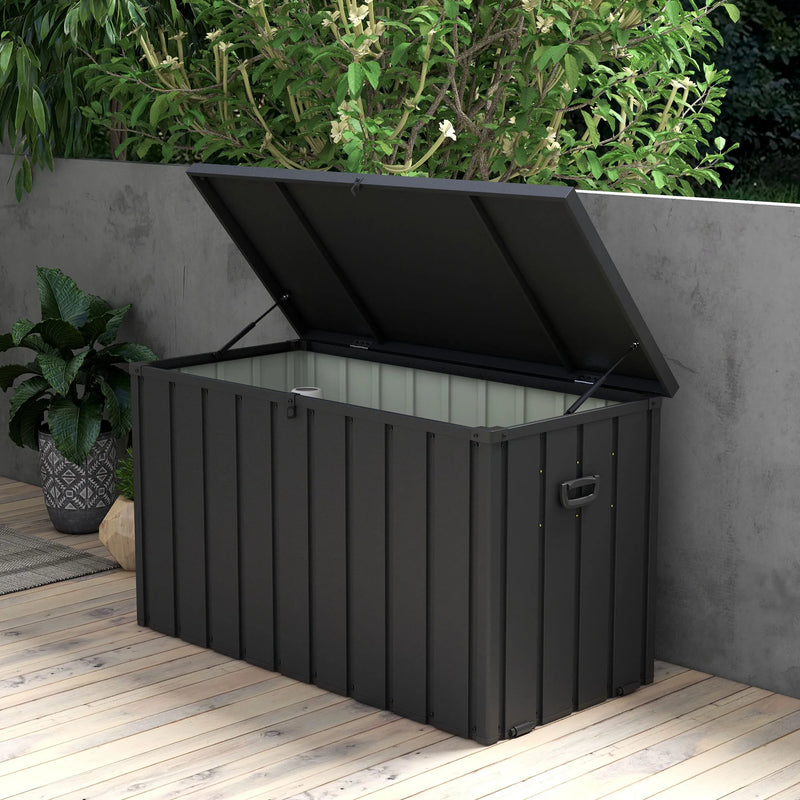
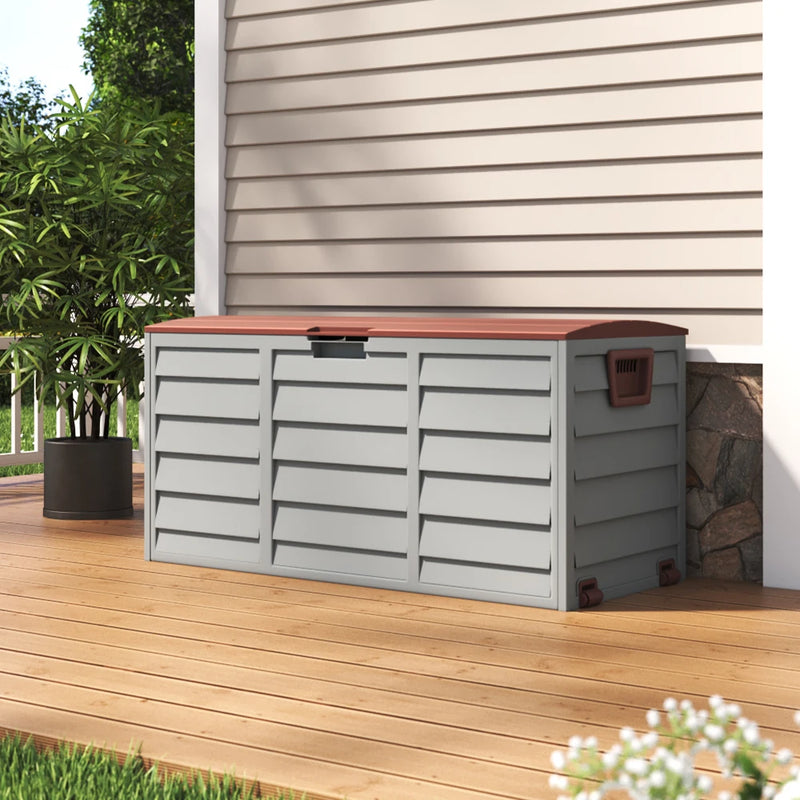
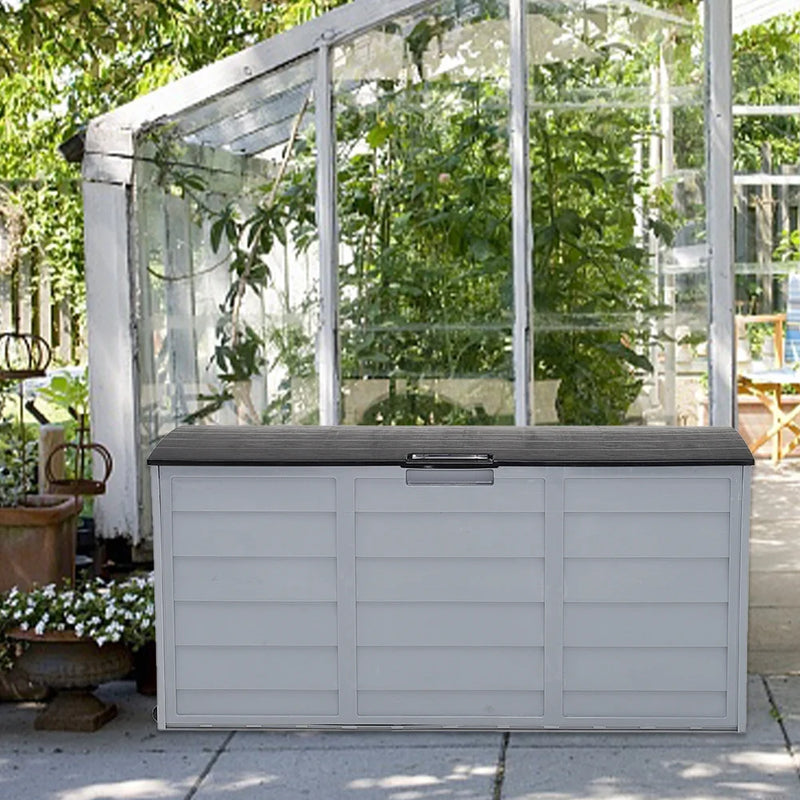
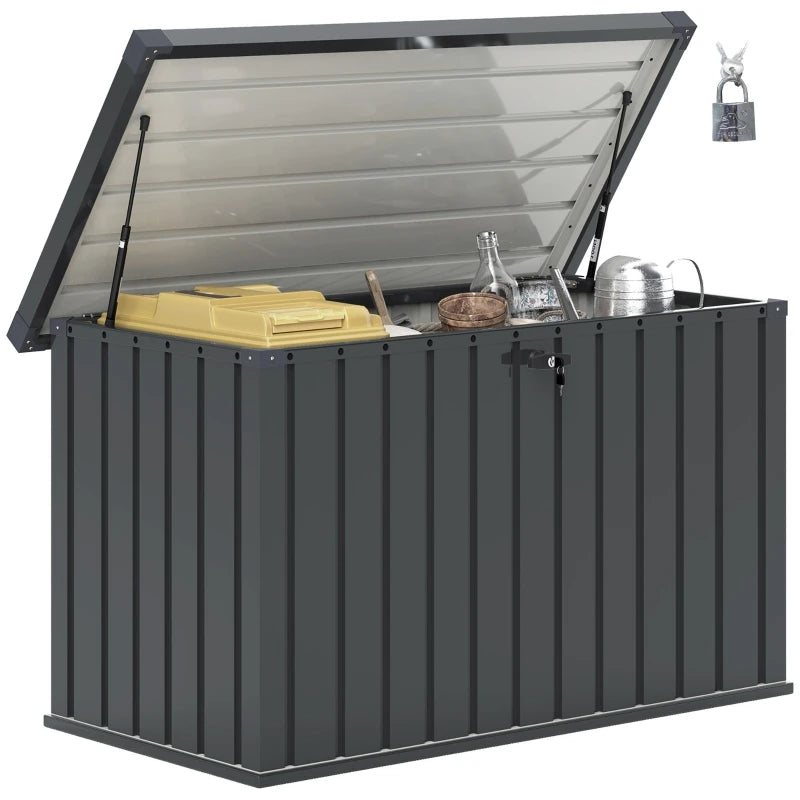
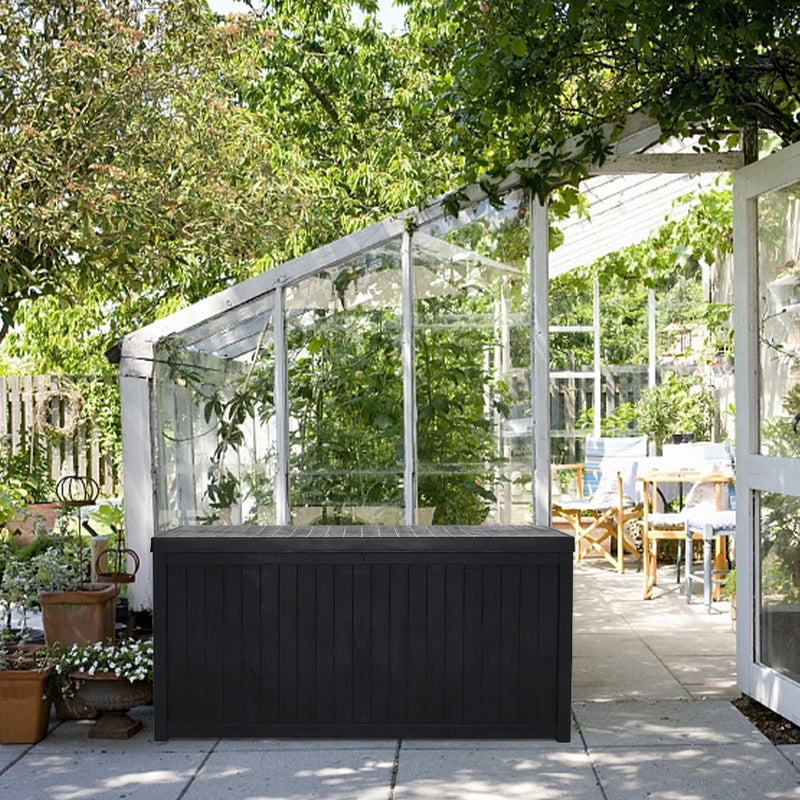
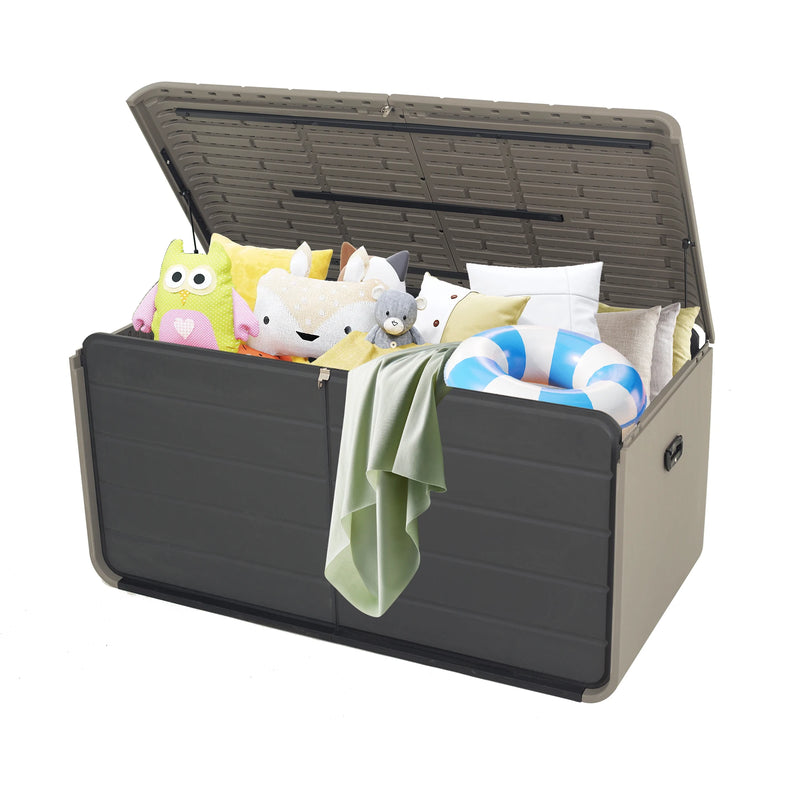
Cushion storage boxes — the right answer for keeping outdoor furniture dry
Patio cushions are an investment. A 6-seat outdoor dining set's cushions cost £200–£500. A new sun-lounger pad is £80–£150. Replacing them every 3 years because they got damp and mouldy is £400–£1,500 you didn't need to spend.
A proper cushion storage box solves this for under £150 in most cases. The boxes here are filtered specifically for cushion-storage suitability — sealed lids that don't sweat, ventilation channels that prevent mould, and capacity sized to typical UK patio sets.
Sizing for cushion sets
| Cushion set | Stacked volume | Recommended box |
|---|---|---|
| 2 lounger pads | ~100L | 150L+ |
| 2-seater bench cushions + 2 backs | ~150L | 200L+ |
| 4-seat patio set, full cushions | ~250L | 350L+ |
| 6-seat dining set + parasol cover | ~400L | 500L+ |
| 8-seat full set + accessories | ~600L | 700L+ |
The 30% buffer matters here especially — cushions don't compress to fit. A box too small means leaving cushions out anyway.
The real enemy isn't rain — it's damp
Cushions don't usually get ruined by direct rain (they go inside before the heavy stuff). They get ruined by sustained damp:
- Moisture in already-wet cushions, sealed in the box, breeds mould overnight
- Condensation forming on cold metal/plastic walls drips back onto fabric
- Box sat on grass that wicks ground moisture into the base
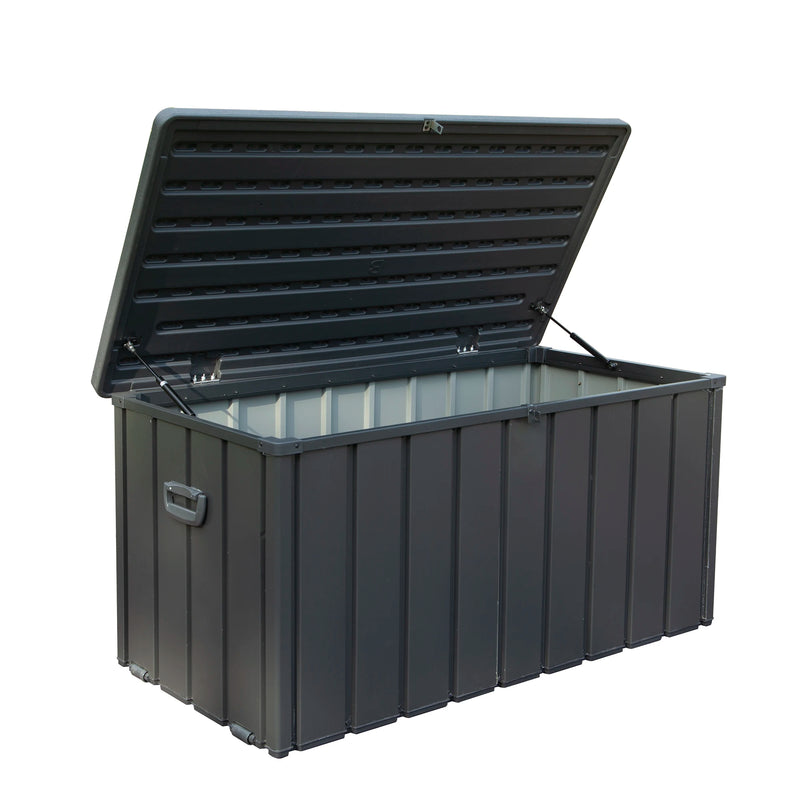
The boxes that actually keep cushions in good condition do three things: ventilation channels (let humidity out), raised internal floor (cushions not in direct contact with the bottom), and overhung lid (lid water sheds away from the gasket).
Ventilation: the counter-intuitive feature
"Sealed waterproof" sounds like the right answer; it's not. Genuinely sealed boxes generate condensation as overnight temperatures drop. The water condenses on cold interior surfaces and drips back onto the cushions. Within a season your "waterproof" box has produced more damp damage than light rain would have.
Look for boxes that mention vented panels, louvre vents, or mesh-protected airflow channels. The vents are small (insect-mesh sized) so water doesn't blow in but vapour escapes.
Routine: putting cushions away properly
The single biggest factor in cushion lifetime isn't the box — it's putting them away dry. If the cushions are damp from rain or dew when you store them, even a perfect box won't save them.
Three habits:
- Bring cushions in before the rain starts, not after
- If they're damp, leave the lid open or stand them in a dry spot for 30 minutes before sealing
- End of season: launder the covers (most are removable), let everything dry fully, then pack away
Materials specifically for cushion storage
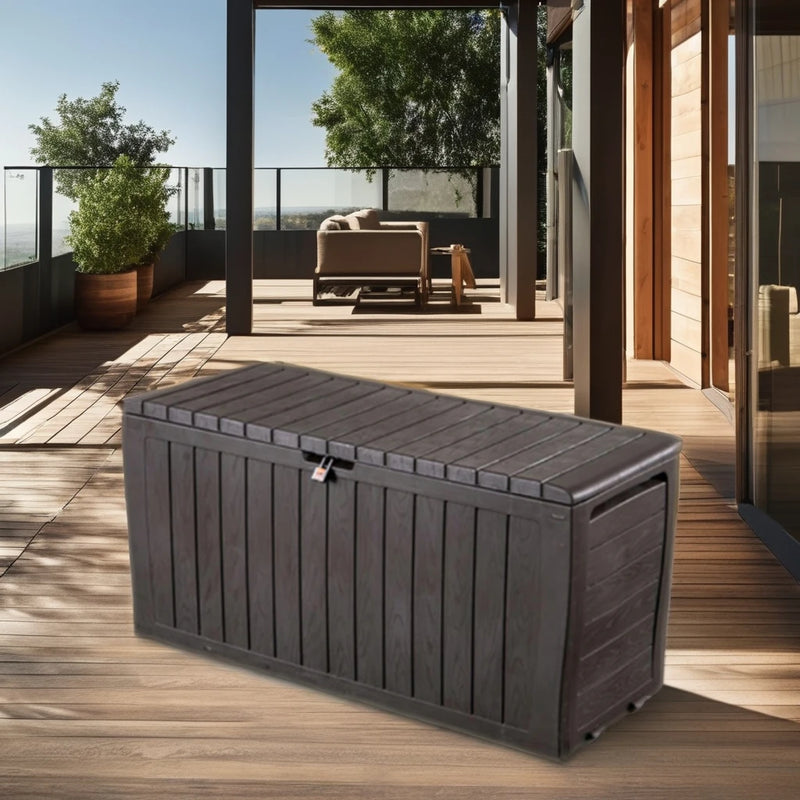
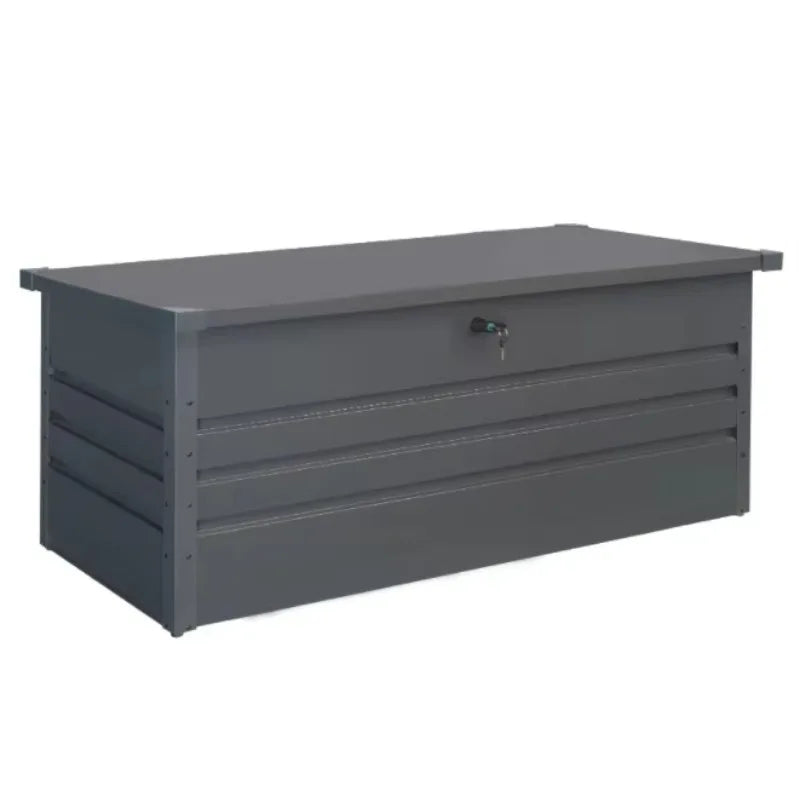
UV-stabilised resin is the most common choice — light enough to position freely, doesn't generate as much condensation as metal, doesn't rot like cheap wood. Galvanised metal works for security-conscious applications but needs vented panels. Wood looks the best but the maintenance/sealing reality is harder.
Doubles as seating
Many cushion storage boxes work as outdoor benches. The cushions live inside; the lid is the seat. This is a good use of garden footprint — storage and seating in one piece. See our dedicated garden storage benches range for furniture-grade options.
Beyond cushions
Cushion-storage boxes are also good for:
- Throws and outdoor blankets
- Hammock pillows and netting
- Pool toys (let them dry first)
- Outdoor rugs (rolled, not folded)
- Soft furnishings for camping and overnight outdoor use
What they're not great for: hard tools (scratch the inside), wet items left in (condensation), or anything heat-sensitive in direct sun.
Delivery
Cushion storage boxes typically ship by courier (smaller units) or pallet (larger). Free over £100, 5–7 working days standard.
See also: waterproof storage boxes, large boxes (500L+), storage benches.