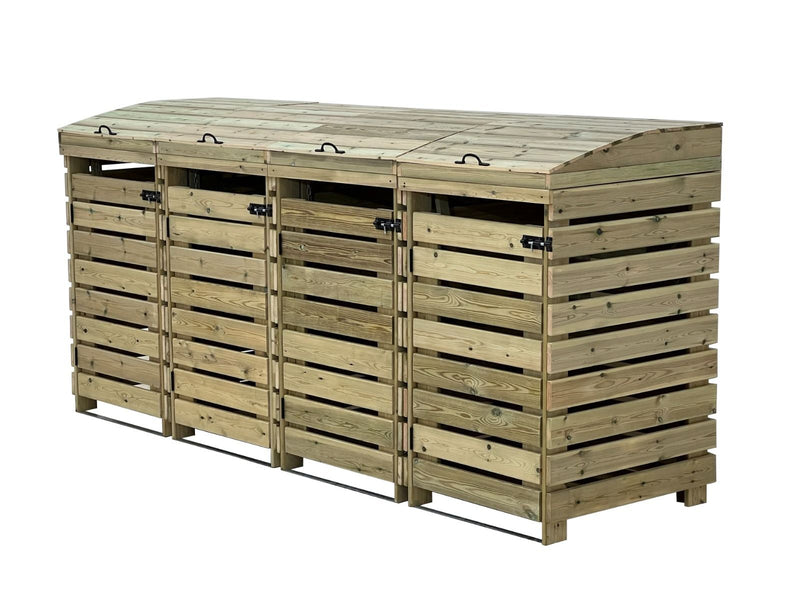
Wheelie bin storage — keeping bins out of sight without making them harder to use
Bin storage is one of those everyday garden problems that nobody actually wants to think about, but everyone has an opinion on once they have. The brief is honestly simple: keep the bins off the front of the house, look acceptable from the street, and not make the weekly bin day worse than it already is.
Sizing: matching the unit to your council bins
UK councils use 240L wheelie bins as standard for general waste, with various sizes (140L, 180L, 240L, 360L) for recycling depending on local scheme. Most households have 2–4 bins out at once. Bin storage is sized accordingly:
- Single 240L bin store — for households with one bin only (rare in the UK)
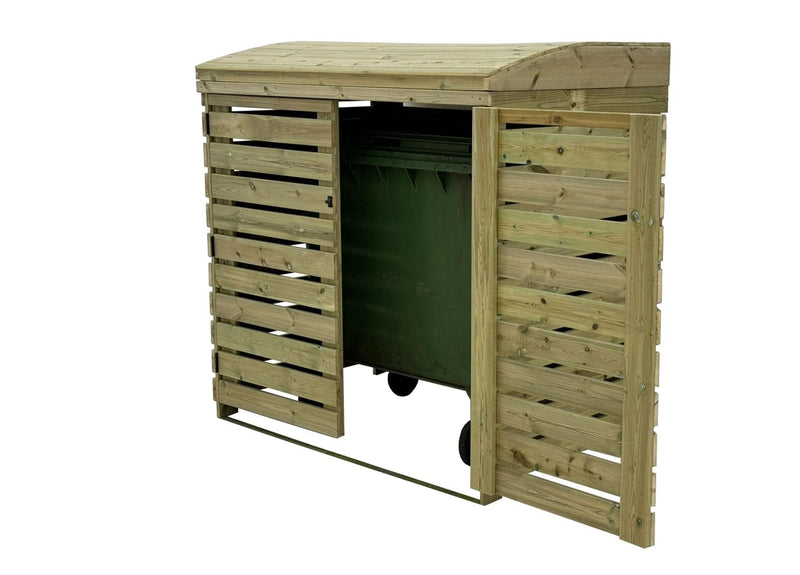
- Double 240L bin store — covers most rural and semi-rural households (general waste + recycling)
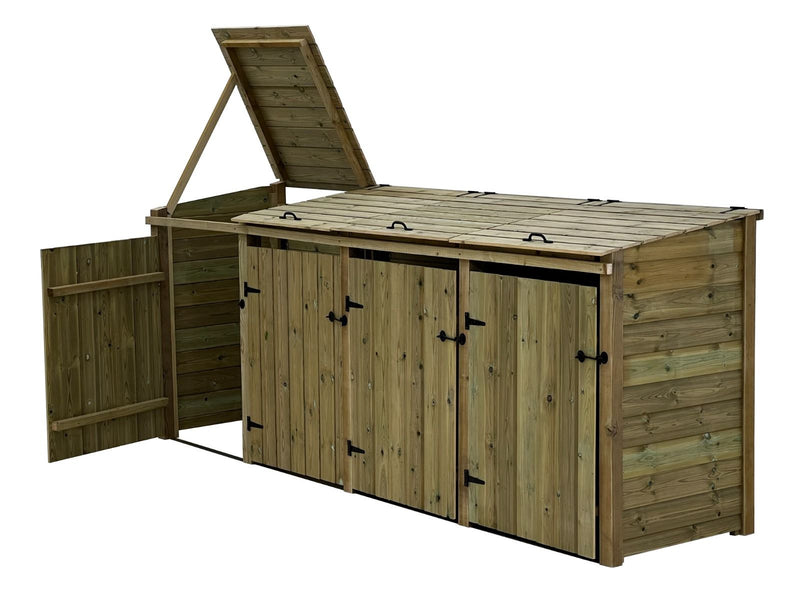
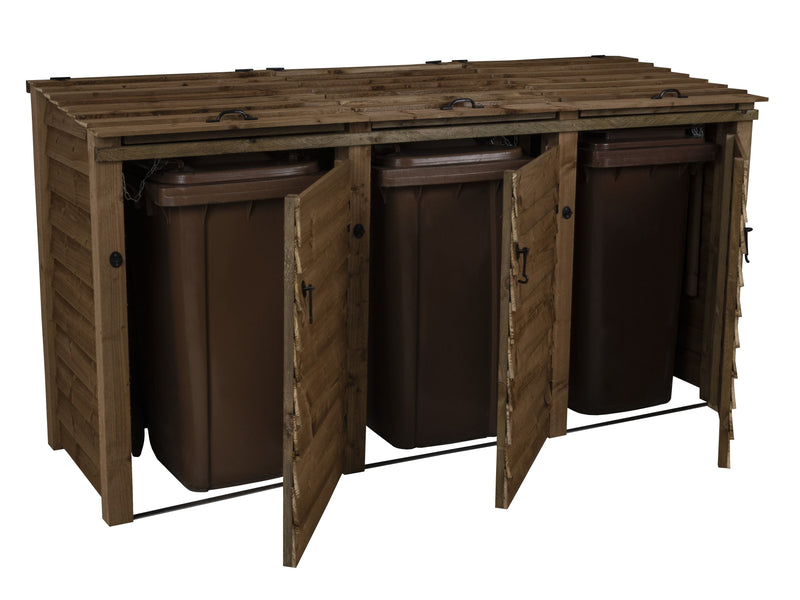
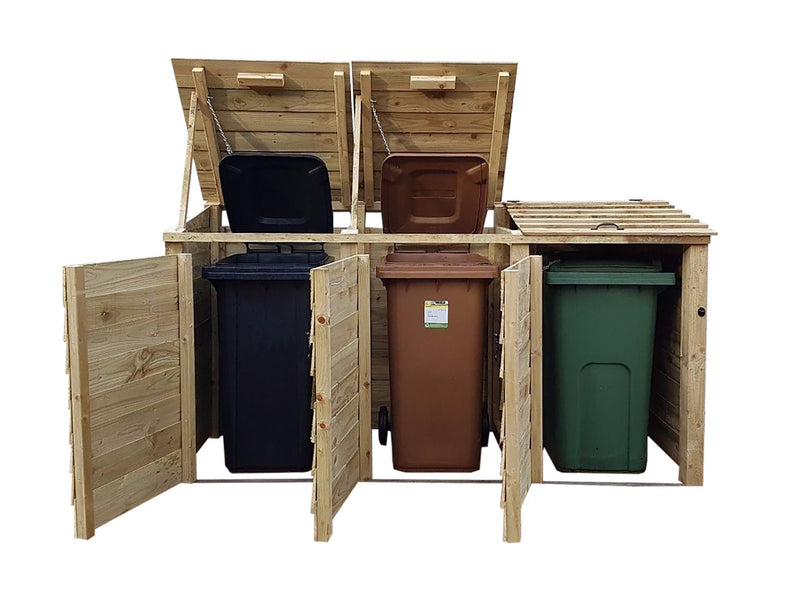
- Triple 240L bin store — UK council standard (general + paper/card + plastic/metal recycling)
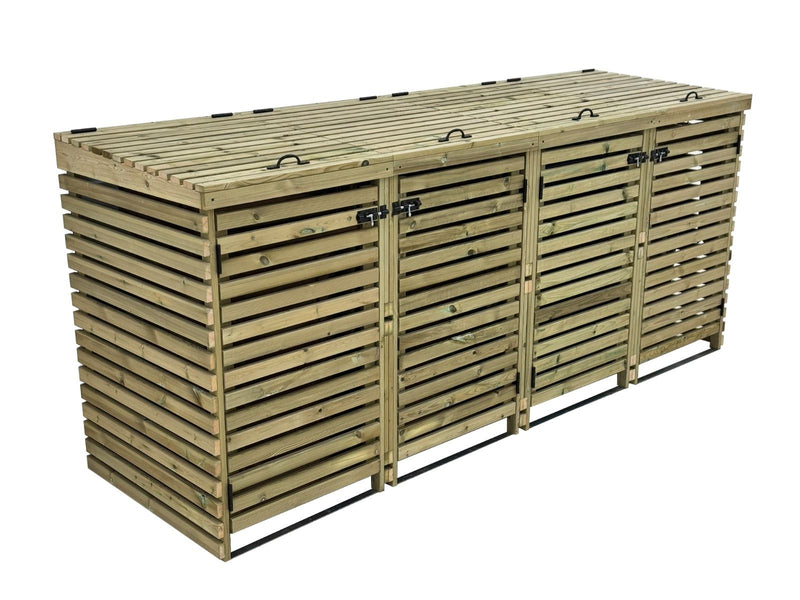
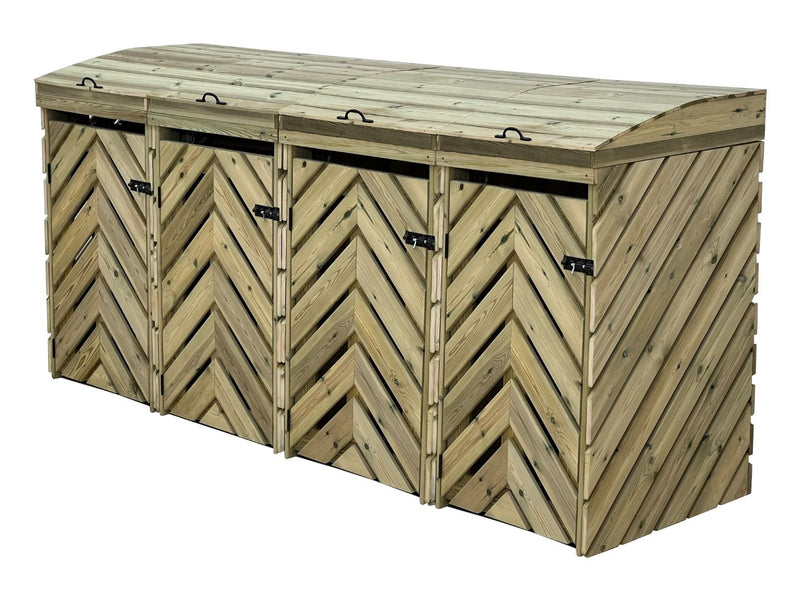
- Quad bin store — for HMOs, large households, or four-stream recycling councils
Measure your bins before buying. "240L" is a category; actual external dimensions vary slightly by manufacturer.
Materials: plastic, wood or metal?
Same trade-offs as the rest of the catalogue:
Plastic bin stores are zero-maintenance and weather-tolerant. Modern UV-stabilised resin handles UK rain and sun without fading or cracking for 10+ years. They look "plastic" — fine for a side return, less ideal for a visible front garden.
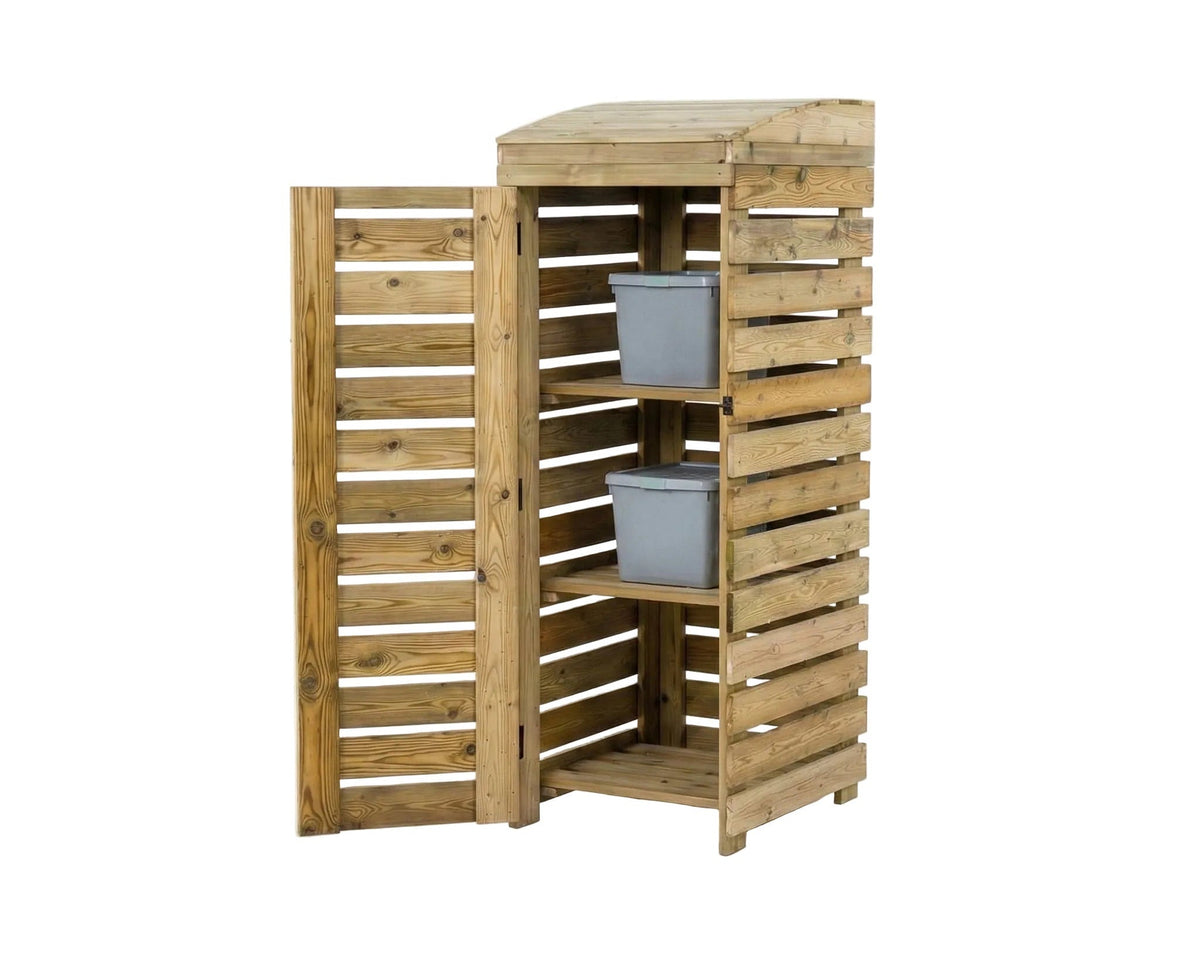
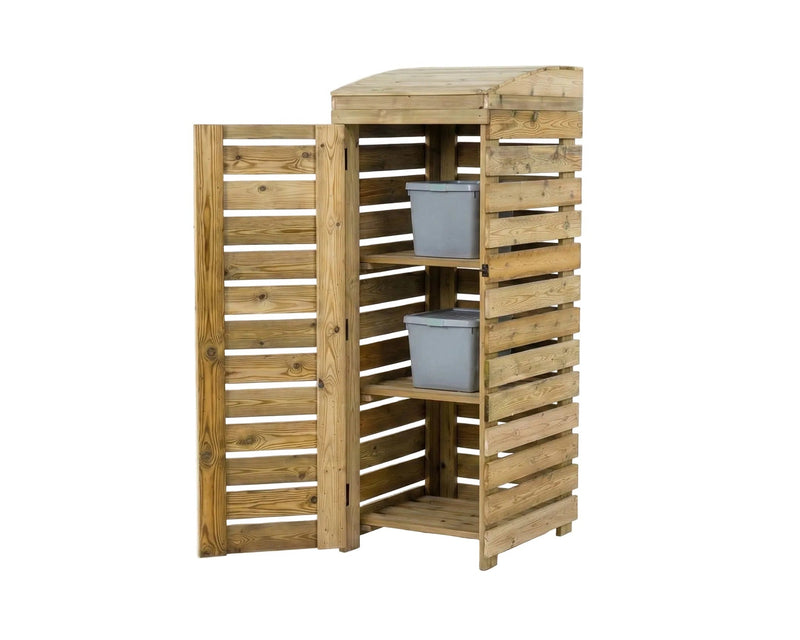
Wooden bin stores look the best, especially as they weather. Pine pressure-treated to BS 8417 Use Class 3 lasts 8–12 years with annual treatment. Worth the maintenance if the unit is visible from the street.
Metal (galvanised steel) bin stores are the most weather-proof and the most theft-resistant — relevant in some urban areas where bin theft happens. Industrial-looking unless powder-coated in a discreet colour.
The practical features that matter day to day
Front-opening AND lid-opening. Top-only access means you lift the lid every time you put rubbish in; you'll resent it within a week. Front access via swing or sliding doors is dramatically more usable.
Lid stays open. Gas-strut lids beat plain hinges. A flat-handed open with one hand while you hold a bin bag in the other is much nicer than fighting a self-closing lid.
Wheel-out base or solid floor? Wheel-outs make bin day easier — you wheel the bin straight out without needing to lift it over a lip. Solid floors look tidier when the bin is in. Pick what matters more to you.
Vermin-proofing. Sealed base joints stop rats. A tight lid stops foxes. Look for products that mention rodent-proof construction explicitly — a marketing claim, but the products that bother making it tend to actually engineer for it.
Where to put it — and what your council will allow
Bin store placement is mostly a planning question, with two practical constraints:
- Bin collection access. Your bins need to reach the kerb on collection day. Most councils require bins be presented at the property edge by 6am — if your store is 30 metres from the kerb, you're wheeling them down weekly.
- Front garden visibility. Some councils, leaseholds and HOAs have rules about visible bin storage. Generally OK if it's tidy and below 1.5m. Always worth checking your tenancy agreement or local planning portal if you're unsure.
Smell, hygiene and the things nobody mentions
A bin store contains a lot of biological matter for a week. The questions worth thinking about:
- Ventilation. Sealed-tight stores get rank by Wednesday. Look for vented designs with mesh or louvre panels.
- Hose-down friendly. Plastic and metal can be pressure-washed; wood can't. If you have toddlers or pets, this matters.
- Drainage. Solid floors retain spills; slatted or open-bottom designs let liquid drain out (which is fine if the unit sits on hard standing, less fine on grass).
Anti-theft features (yes, bin theft is a thing)
Wheelie bin theft happens, particularly in urban areas — a missing bin is at minimum a £40 council replacement charge, more if the bin had recyclables or refuse already in it. Two practical features:
- Hasp for a padlock. Doesn't need to be high-security; just enough that the bin can't be wheeled out on a Tuesday evening.
- Numbering / identification panel. Helps the council return it if it does walk.
Sizes you'll actually fit through your gate
Triple bin stores are typically 200–220cm wide. Standard UK side gates are 90cm. The store needs to be assembled in place — make sure you have access for the flat-pack components, not the assembled unit. We've had customers buy and then realise the assembled width won't fit through a side return; it's an annoying lesson.
Measure the narrowest point of your access route before ordering anything over 1.8m wide.
Delivery and assembly
Bin stores ship pallet-direct from a UK warehouse, typically 5–7 working days, free over £100. Triple bin stores assemble in 60–90 minutes with two people; smaller units in 30–45 minutes. See our assembly help page for tools and tips.
Common questions
"Will it lift in high winds?" Empty plastic bin stores can lift in 50+ mph winds. Solutions: ground anchors (drilled into hard standing), bag-of-sand ballast inside the unit, or storing it leaning into a wall. Metal stores are heavy enough that this isn't usually an issue.
"Can I store other things in it?" Plenty of customers use the empty space alongside bins for compost bags, recycling sacks, or bin liners. Avoid anything food-attractive (charcoal, BBQ accessories) — you'll have visitors.
"How long does pressure-treated wood actually last?" 8–12 years to BS 8417 Use Class 3 standard, with maintenance. Untreated softwood lasts 3–5 years and shouldn't be used outdoors regardless of price.