
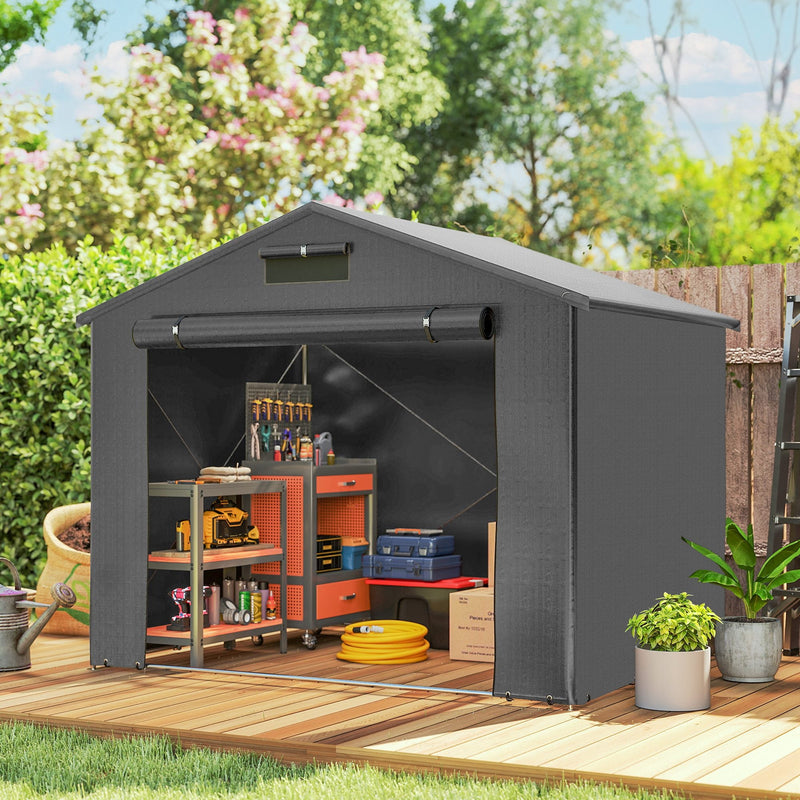
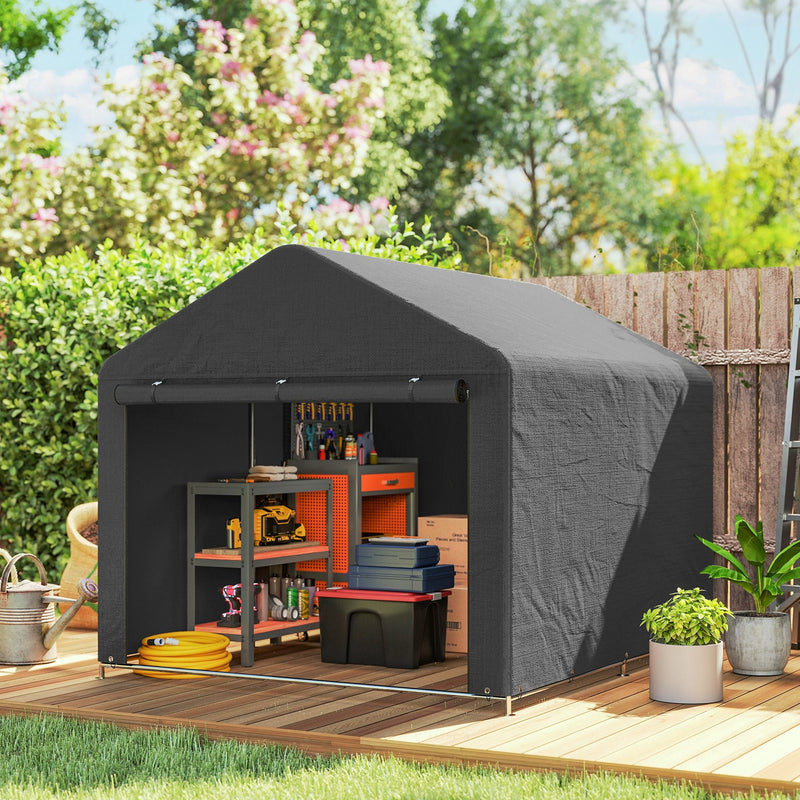
Bike storage sheds — walk-in storage for 1 to 4+ bikes
A bike storage shed is the gold standard for outdoor bike storage. Walk-in access means you don't have to lift bikes over a lip. More space means panniers, helmets and accessories live alongside the bikes. Better security comes from a real door, real hinges, and a structure that takes a real lock.
The trade-off is footprint — a shed for 2 bikes is roughly 2m × 1m. If your garden can spare that, it's the most usable bike storage option there is.
Sizing by bike count
| Bikes | Internal footprint | Notes |
|---|---|---|
| 1 adult | 200cm × 80cm | +30cm for accessories |
| 2 adult | 200cm × 110cm | Wheels offset (one in, one out) |
| 2 adult + 1 child | 220cm × 130cm | Child bike vertical or alongside |
| 3 adult | 220cm × 150cm+ | Tight; consider rotating one bike |
| 4+ adult | 300cm × 150cm+ | Walk-in with central aisle ideal |
If you ride frequently, size up — squeezing bikes in past one another causes damage to derailleurs and frames.
Walk-in vs step-in vs reach-in
Walk-in sheds have a full-height door (usually 165cm+) and you step inside completely. Best for daily-use bikes. Space-eater.
Step-in sheds have a partial-height door — you bend to step in. Saves height when planning permission is tight (under 2.5m total).
Reach-in sheds have a hinged top or front panel; you reach in rather than enter. Space-saving but harder to use daily, especially with multiple bikes.
Bike storage shed materials
Galvanised steel — most secure, longest-lived (20+ years if hot-dip galvanised). Industrial look. Heat issue in summer for e-bike batteries (remove for storage indoors regardless).
Pressure-treated timber — best aesthetic, blends into garden. 10–15 years with annual treatment. Less secure than steel; can be levered open without specialist tools.
UV-stabilised plastic — middle-ground option. Zero maintenance, decent security, modest aesthetic. 10–12 years.
Security: what insurance requires
Most home insurance schedules require:
- Bike stored in a locked, fixed structure — a shed counts
- Sold Secure-rated lock — Bronze, Silver or Gold depending on bike value
- For high-value bikes, a ground anchor + chain in addition to the shed lock
For e-bikes specifically, store the battery indoors. Most insurers require this; it also reduces theft motivation. See our lockable bike storage range for explicitly insurance-compliant builds.
Floor: included or not?
Some bike sheds come with an integrated floor; others sit on whatever you place them on. Integrated floors:
- Keep bikes off ground moisture
- Provide a clean, level surface (no grass growing through)
- Make the structure rigid as a single unit (better for wind)
If buying a shed without a floor, plan paving flags or a timber base underneath. Don't put a shed directly on grass — within 18 months you'll have rust at the base, mould inside, and a bike that doesn't run smoothly.
Ventilation
Bikes generate humidity from chain lube, post-ride dampness, and wet panniers. A sealed shed gets damp inside; a vented one stays dry. Look for:
- Eaves vents (under the roofline)
- Floor-level mesh-protected ventilation
- Door vents (especially on the windward side)
Don't over-ventilate — you want airflow, not draughts. Mesh-covered openings are ideal.
Common installation issues
- Doorway too narrow — measure your door swing. A 70cm doorway is uncomfortable for handlebar clearance.
- Roof too low — bikes are tall when wheeled vertically. Allow 165cm+ internal headroom for adult bikes upright.
- Hinges on wrong side — if the shed faces a wall to one side, you need the door to open the other way. Check before ordering.
- No drainage in front — water pools at the door threshold and rusts hinges. Slight slope away from the shed solves it.
Delivery and assembly
Bike sheds ship pallet-direct from a UK warehouse, free over £100, 5–7 working days. Assembly takes 2–4 hours with two people for most models. See assembly help.
For lockable boxes (smaller footprint), see lockable bike storage. For metal-only options, browse metal bike storage.