
Garden storage boxes — what to actually look for in a UK garden
A garden storage box gets one job: keep what you put inside it dry, accessible and undamaged through several British winters. That sounds simple. The reason most people end up replacing theirs every two or three years is that it's not.
The boxes that survive long-term in UK gardens share a small list of properties: UV-stabilised resin or galvanised steel (not commodity HDPE), sealed lid joinery, properly engineered drainage, and hardware that won't seize after a winter of rain. The boxes that fail share the opposite: thin plastic that goes brittle from sunlight, untreated steel that rusts at the seams, lids that warp, hinges that snap.
This page is the buyer's guide we wish we'd had when we bought our first storage box. If you only have a minute, here are the four questions worth asking before you click buy.
1. What are you actually storing?
The single biggest mistake we see is people buying based on litres without thinking about shape. A 350L box is great for cushions but useless for a folded patio table; a 700L box swallows BBQ accessories but won't fit through a typical side gate.
- Cushions and soft furnishings → look for sealed lid gaskets and ventilation channels (so trapped damp doesn't grow mould). 200–500L typical.
- Garden tools → hooks or vertical compartments help. Look at lockable options if you keep power tools outside.
- BBQ accessories, charcoal, fuel cans → resin not metal (heat). 300–600L typical.
- Pool toys, kids' garden kit → large 600L+ boxes with a lid the kids can lift safely.
- Bike helmets, charging gear, e-bike batteries → small lockable units. Browse small (under 200L).
2. Plastic, metal or wood?
Each material has a sensible answer depending on where the box will live and how much maintenance you'll tolerate.
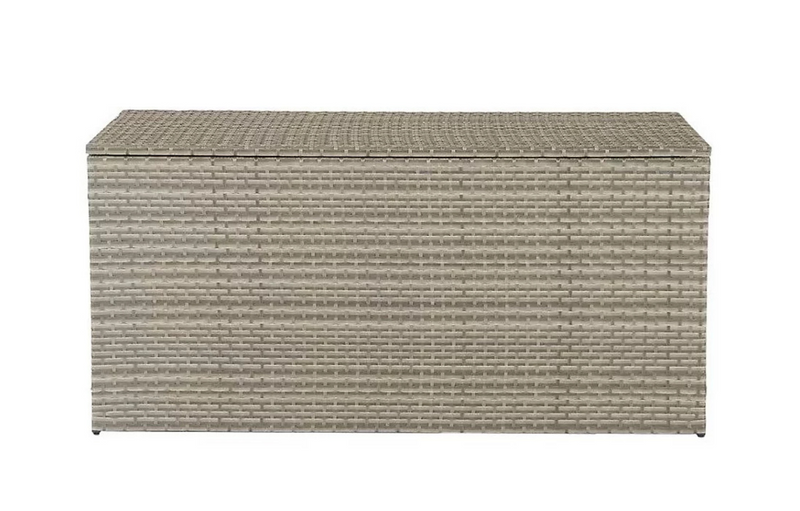
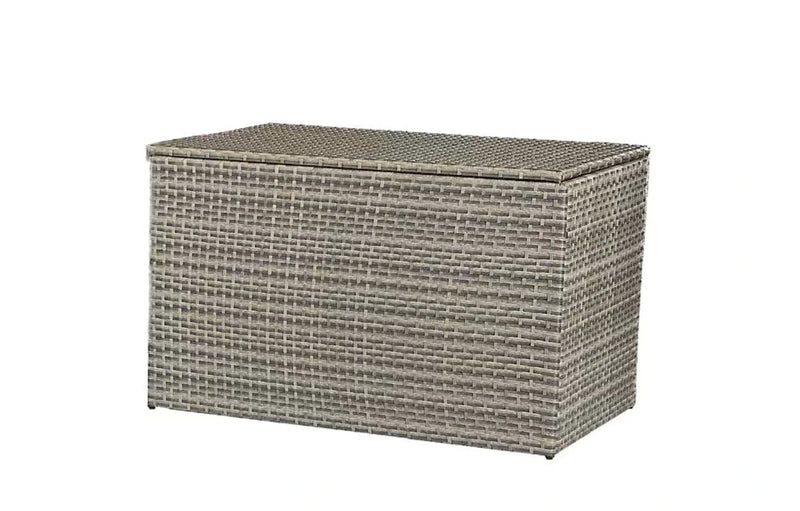
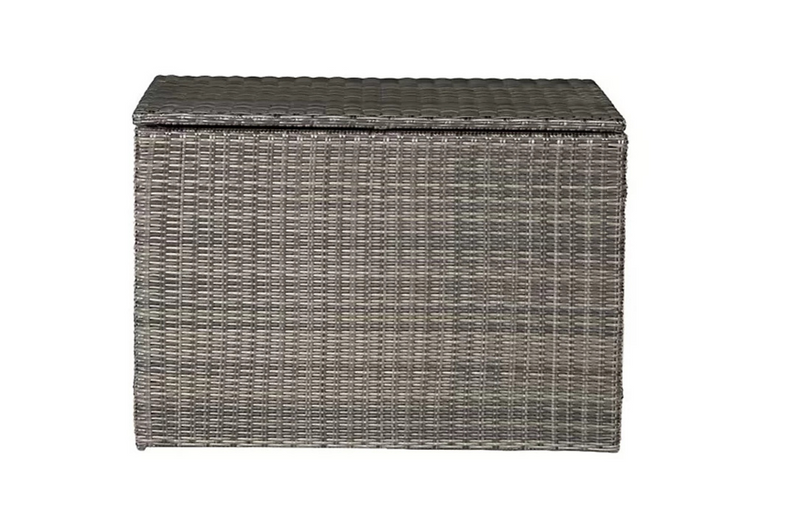
Plastic (UV-stabilised resin) is the lowest-maintenance option. No painting, no staining, no rust. The downside is aesthetic — even good resin looks like resin. We stock plastic storage boxes made from thicker-than-standard resin with sealed joinery and a 10-year structural life expectancy under UK weather. They sit happily on a patio for a decade.
Metal (galvanised steel) is the most secure and the most weatherproof. Hot-dip galvanising prevents rust at the seams; powder-coating gives a clean finish. The downsides are heat (don't store anything temperature-sensitive in direct sun) and condensation (you'll want internal ventilation). Browse metal storage boxes for the toughest builds.
Wood (FSC-treated pine or cedar) is the prettiest by a country mile but the most maintenance — annual or bi-annual treatment to keep rot at bay. Best in covered or partly-sheltered locations.
3. Will it actually keep water out?
"Waterproof" is a word manufacturers use loosely. There's a genuine difference between weatherproof (sheds water in normal rain) and waterproof (stays dry in driving rain hitting all four sides). For UK gardens, especially exposed ones, you want the second. Our waterproof storage box range is filtered for products that pass a real test — sealed lid gasket, channelled drainage, no flat top surfaces that pool water.
If you'll store anything genuinely sensitive (cushions, electronics, leather, wood-handled tools), spend the extra £20–40 for a properly waterproof model. The replacement cost of one ruined cushion set covers the price difference.
4. How will it actually be used day to day?
This is the part nobody thinks about until the box is in their garden. Two questions:
- Lid: gas-strut or hinged? Gas-strut lids stay open by themselves — much better if you'll be reaching in regularly. Cheaper boxes use plain hinges that need a prop.
- Doors or top-loading? A 600L box with only a top lid means you're rummaging. A box with both top and front access is dramatically more usable.
Sizing: how big is the box you actually need?
Use cushion volume as a rough guide:
- Two seat cushions + two back cushions: ~200L
- 4-seat patio set, full set of cushions: ~400–500L
- 6-seat patio set + parasol cover + accessories: ~700–900L
- Patio set + bbq cover + pool toys + tools: 1,000L+ (or consider a small shed)
If your needs cross 1,000L, a small lockable shed often works out cheaper per litre and offers walk-in access, which is meaningfully nicer to use.
Base prep — boring but important
The single most-skipped step. A storage box on uneven ground will eventually warp; lids will stop closing flush, gaskets will fail, and water will get in. You want a level, solid surface — concrete slab, paving flags or a properly-bedded gravel base. Do this once and you forget about it; skip it and you replace the box.
If you're putting a box on grass, expect maintenance. Lawns settle unevenly, especially after a wet winter. Consider four paving flags as a minimum.
Security — when does a lock actually matter?
For garden tools and BBQ accessories, a basic latch is fine. Where security genuinely matters is e-bikes, e-bike batteries, power tools, and anything left for long periods unattended. For those, look at our lockable bike storage range or any of the larger metal boxes with Sold Secure-rated hasps. A padlock that costs £20 from a hardware shop is a perfectly reasonable upgrade — make sure the hasp is rated to take it.
UK delivery, returns and what we actually back
All boxes on this site ship from a UK warehouse — most arrive in 5–7 working days, free over £100. Larger units (over 1m on the longest side) ship pallet-direct to your kerbside; the driver doesn't bring it onto your property, so plan for help moving it.
Every order is covered by your full Consumer Rights Act 2015 protections (satisfactory quality, fit for purpose, as described) and the Consumer Contracts Regulations 2013 14-day right to cancel. Our returns page walks through the practical steps if a product doesn't work for you.
Common questions, answered honestly
"Plastic vs metal — which lasts longer?" A properly UV-stabilised plastic box lasts 8–12 years easily. A galvanised metal box can last 15–20 if it's actually hot-dip galvanised (not painted). Cheap powder-coated metal boxes that aren't galvanised underneath will rust at the seams within 4–6 years. The material matters less than the build quality.
"Will mice get in?" They will if there's a gap. Sealed lid gaskets and well-fitted base joints stop them. The boxes worth buying have both.
"Does it need to be flat-pack?" Most are, simply because shipping a 600L assembled box gets expensive. Assembly typically takes 30–60 minutes. See our assembly page for honest time estimates.
"What about UK winters specifically?" Frost cracking is the killer. Brittle plastics (the cheap stuff) crack at -5°C onwards. UV-stabilised resin is engineered to flex through the cold. If you're in Scotland or anywhere routinely below freezing for weeks, lean towards metal or higher-spec plastic.