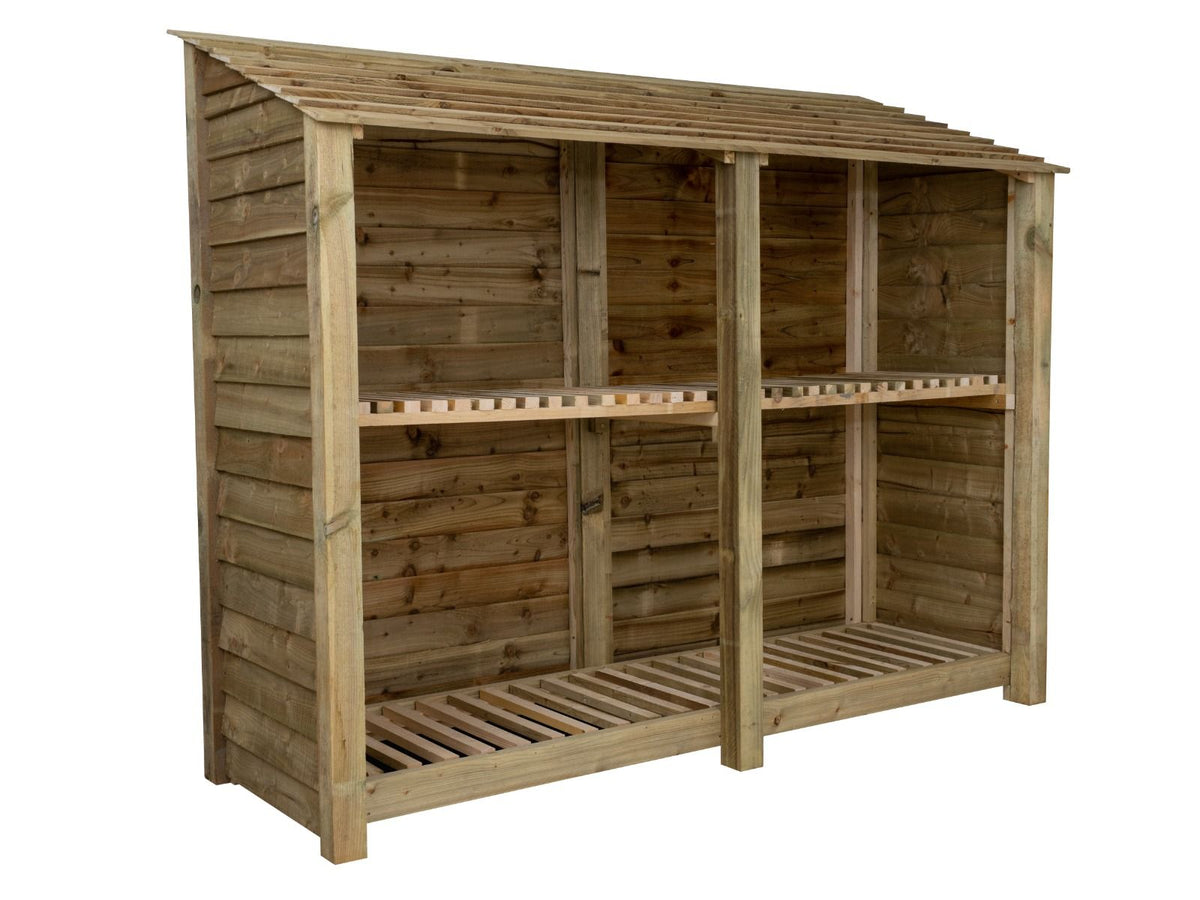
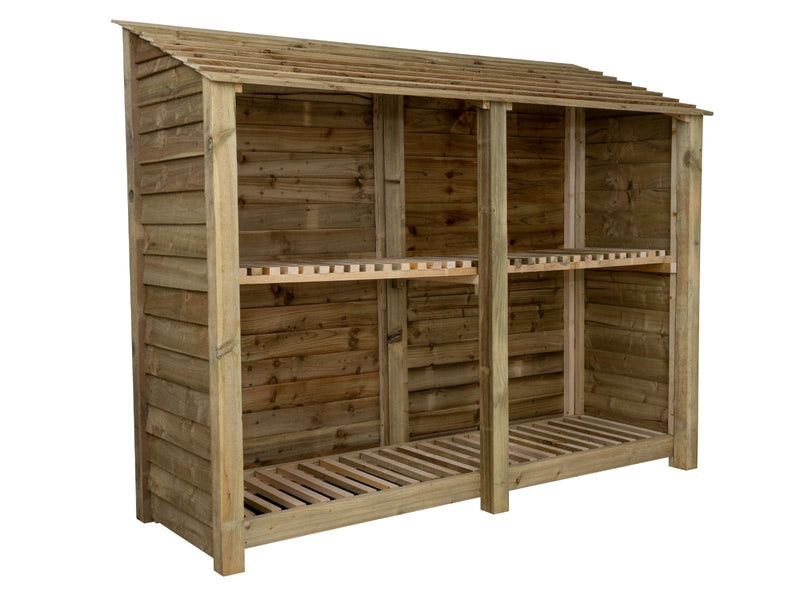
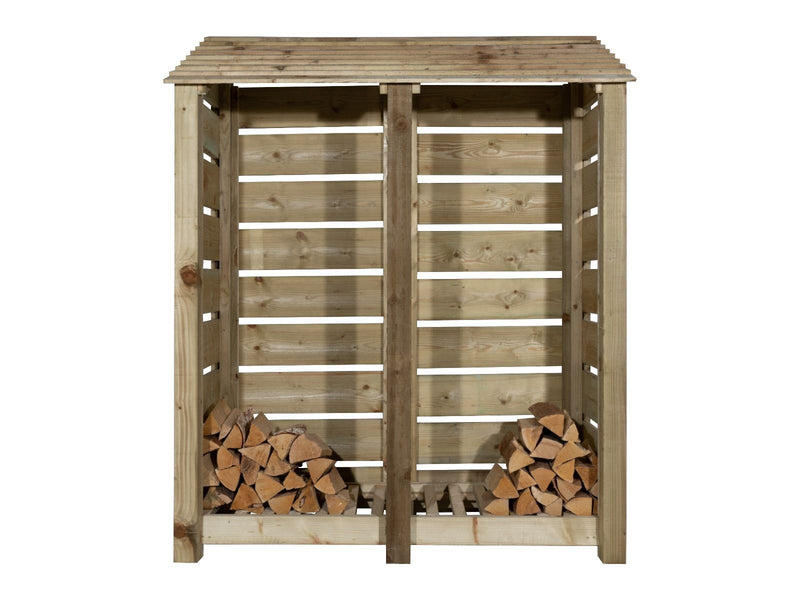
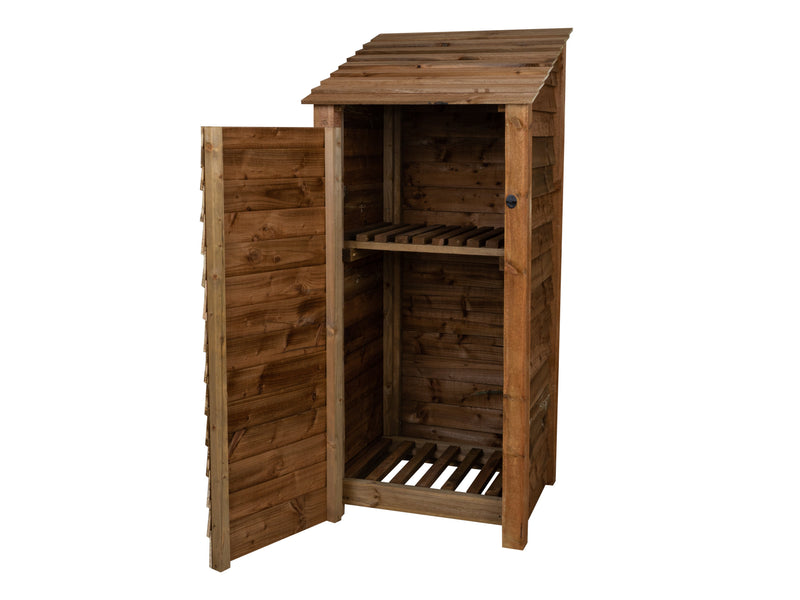
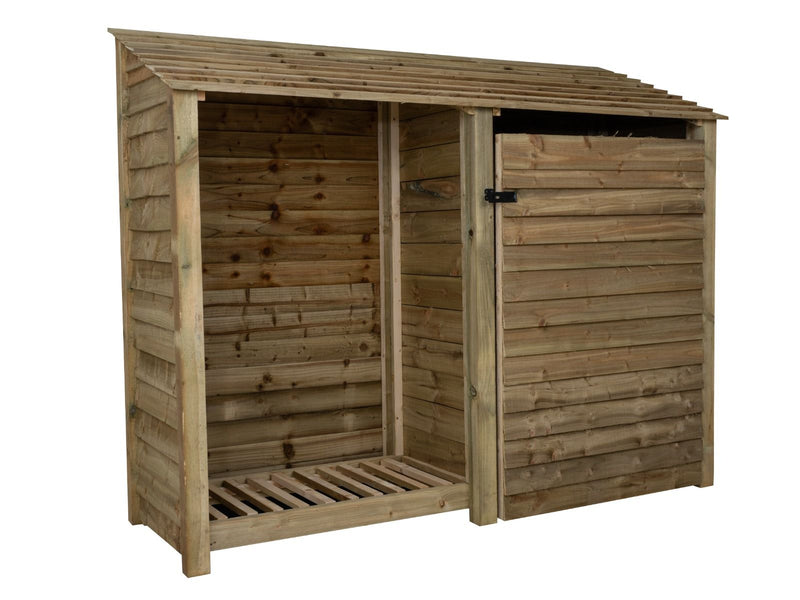
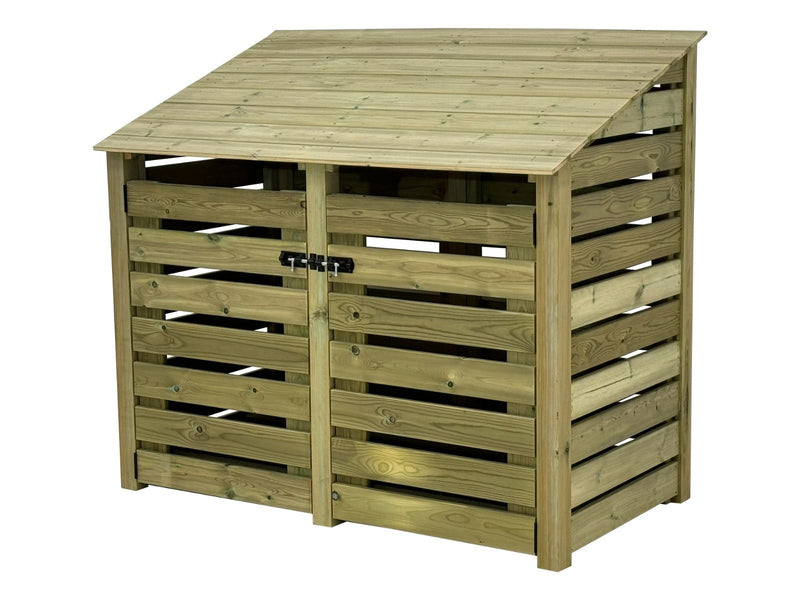
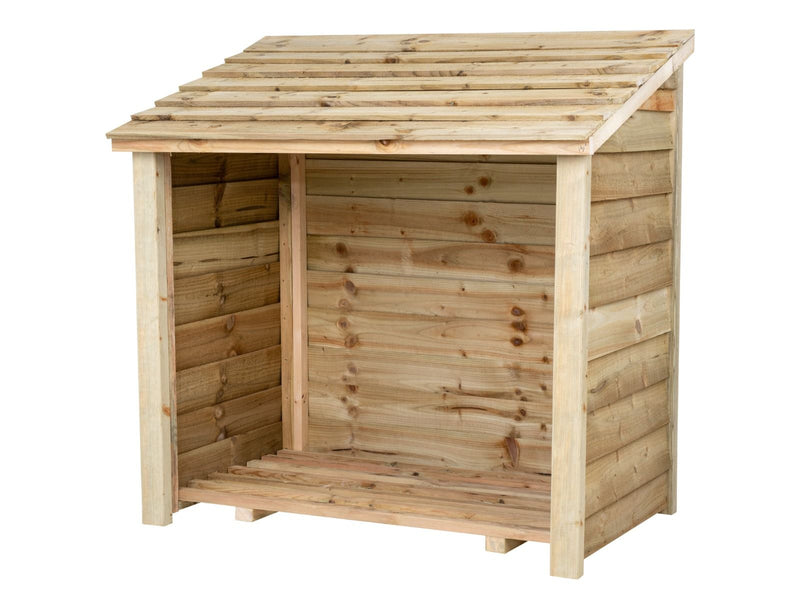
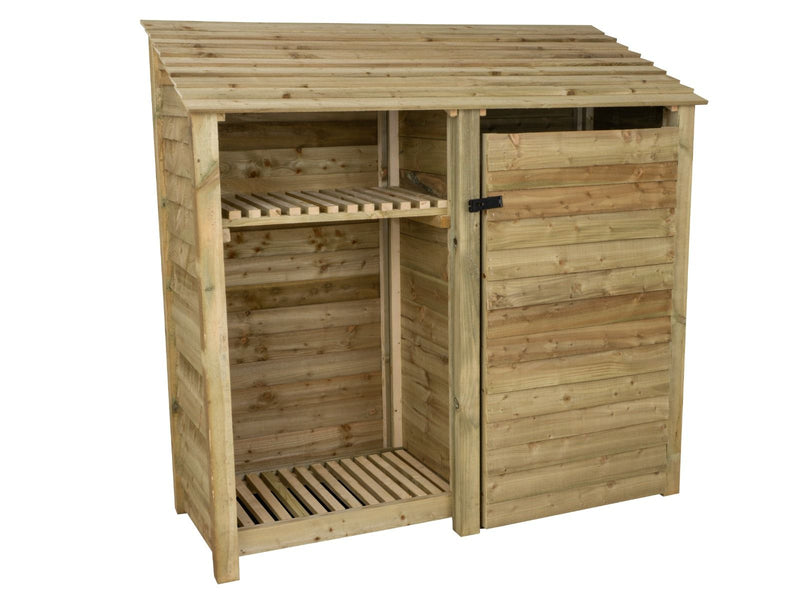
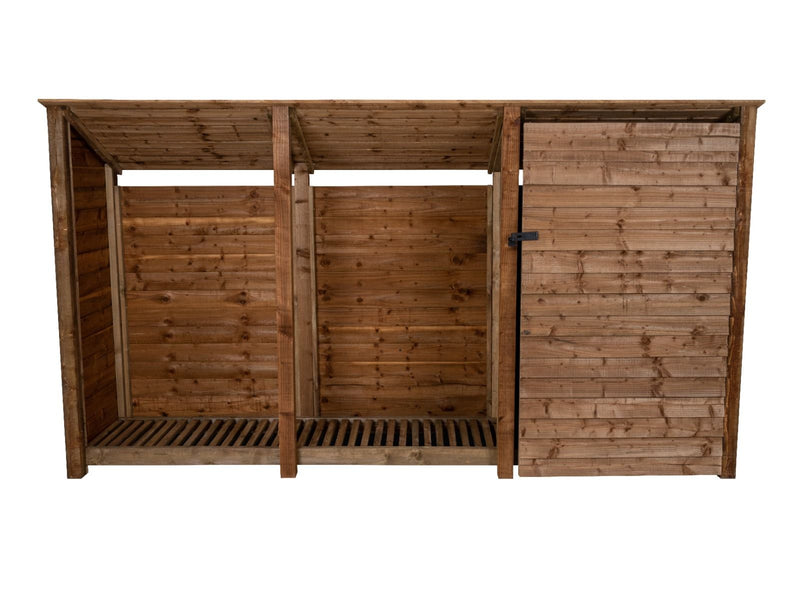
Log stores — drying firewood properly is the whole job
If you have a wood-burning stove or open fire, a log store does one job that nothing else does: keeps logs covered while letting them actually season. Wet logs, even covered ones, don't burn well — they smoke, they tar your flue, they're inefficient. The point of a log store is air circulation plus rain shelter, in that order.
This is genuinely simple to get right and easy to get wrong. The cheap stores online are roof-and-back constructions with no airflow at the sides, which doesn't season logs — it just keeps wet logs wet for longer.
What "seasoned" actually means
Logs need to dry from the ~50% moisture content of green wood down to 20% or below for clean burning. UK firewood standards (Ready to Burn certification) require under 20%. Below 15% burns hot and clean.
Drying time depends on:
- Species — softwoods (pine, fir, larch) dry in 6–12 months. Hardwoods (oak, ash, beech) take 12–24 months. Some take 3 years (oak especially).
- Splitting — split logs dry roughly twice as fast as un-split rounds.
- Storage — air movement matters more than temperature. Logs stacked in a wet, still corner stay wet. Logs stacked in a windy, covered store dry quickly.
What a good log store actually does
Three principles:
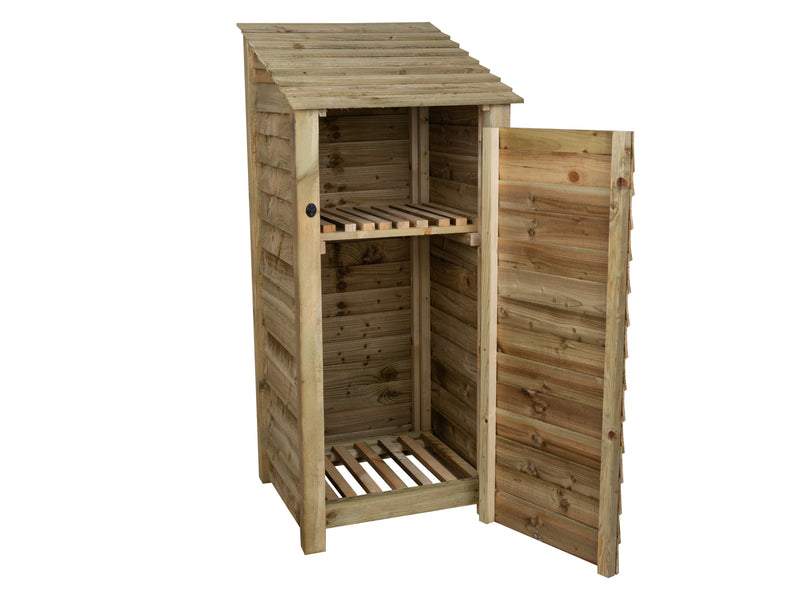
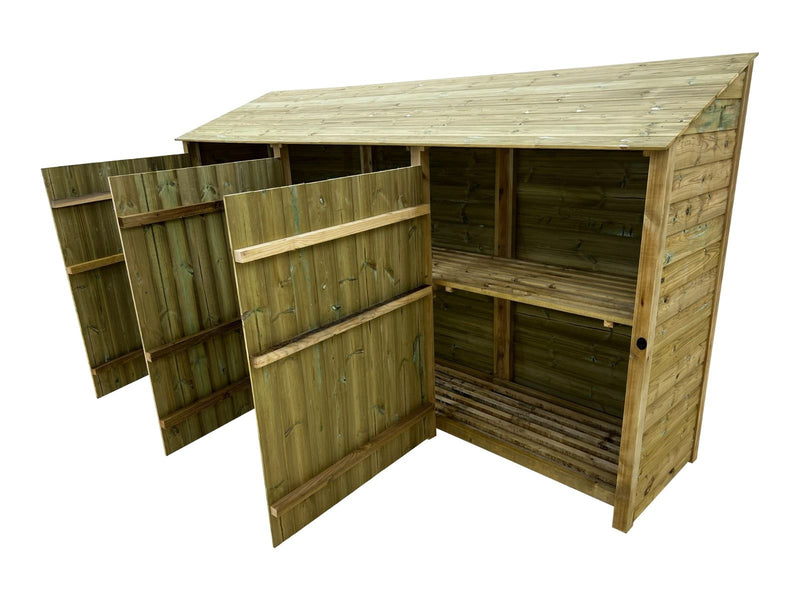
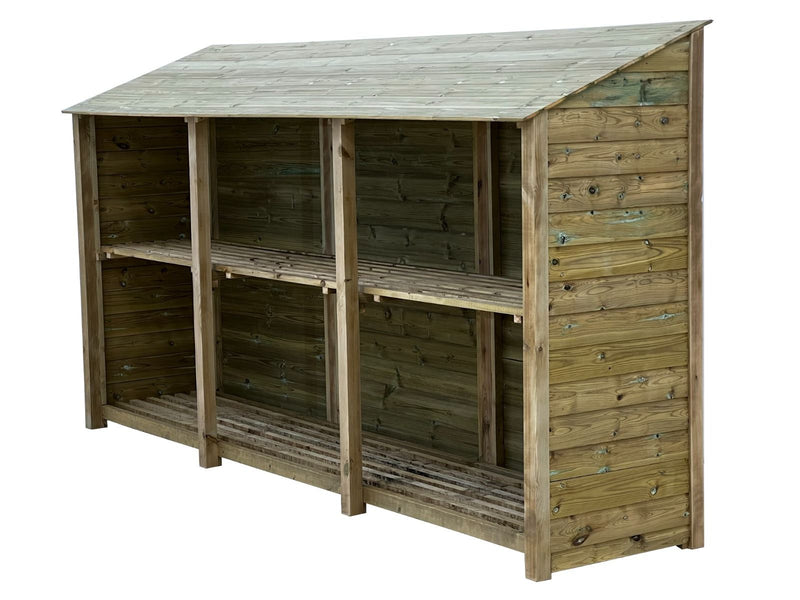
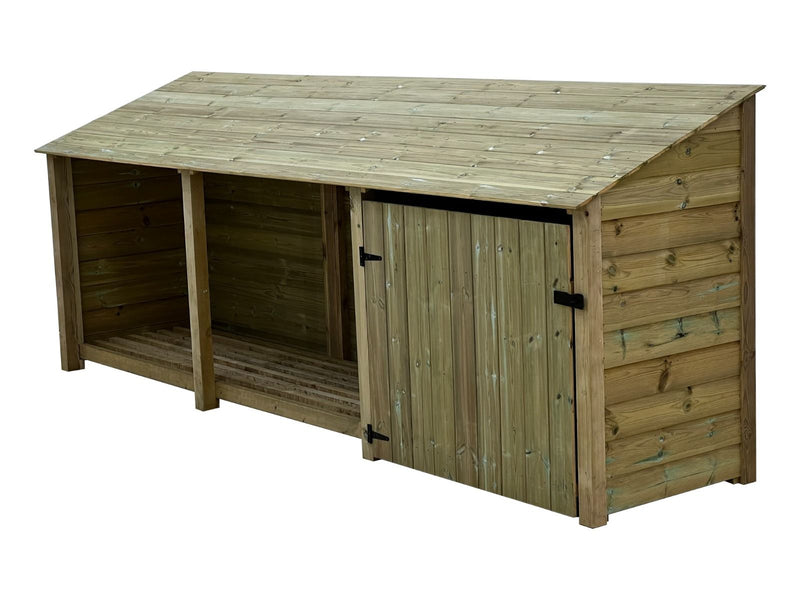
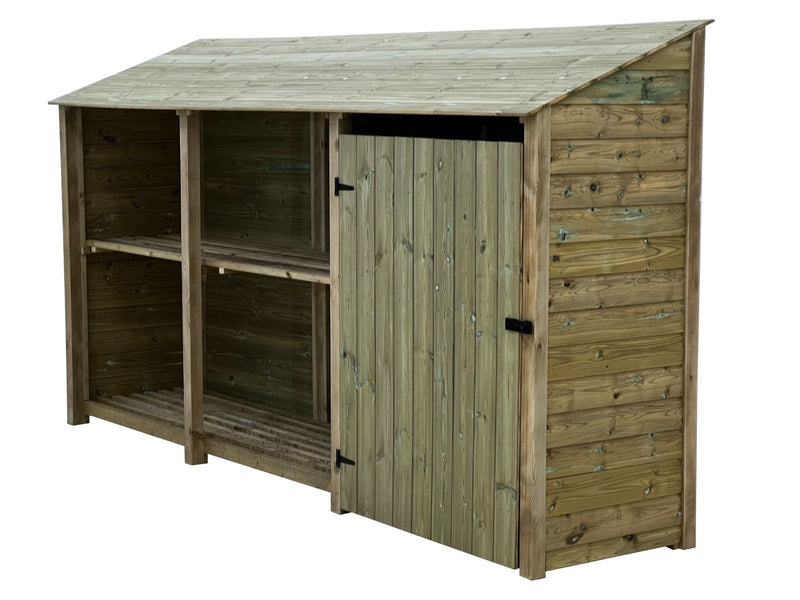
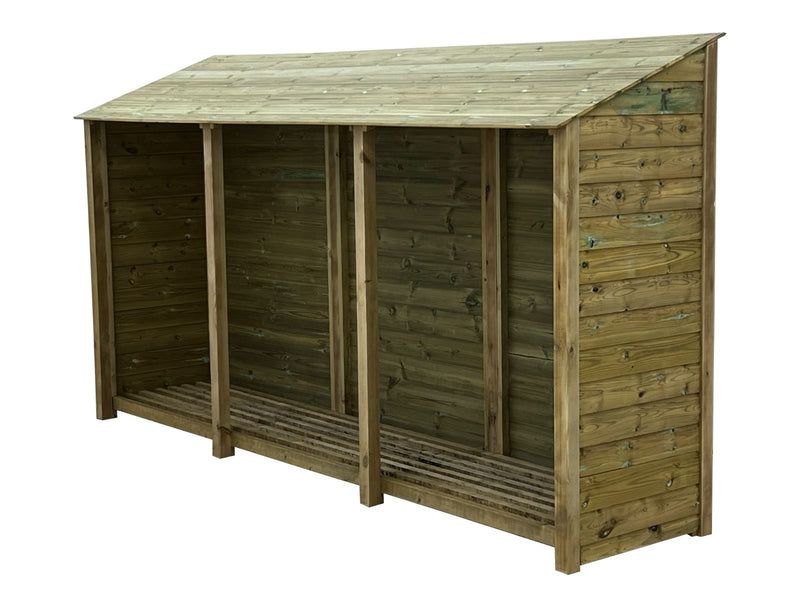
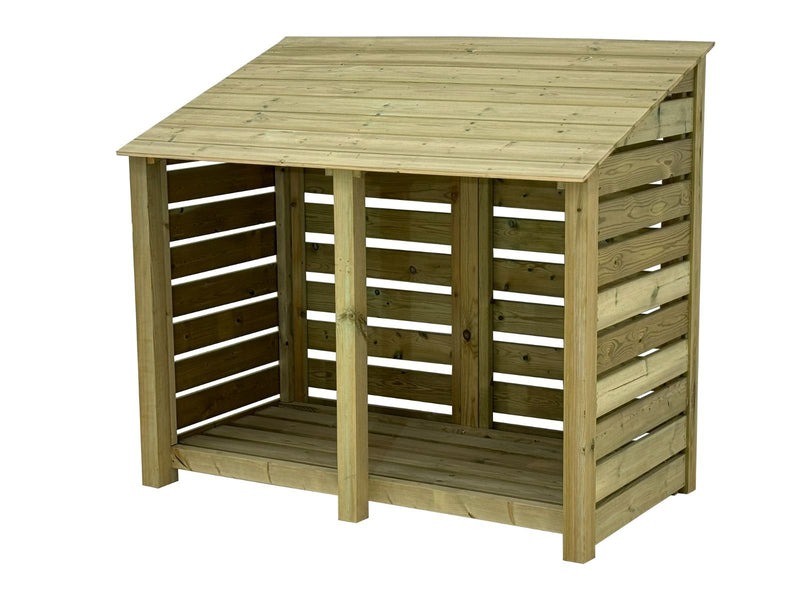
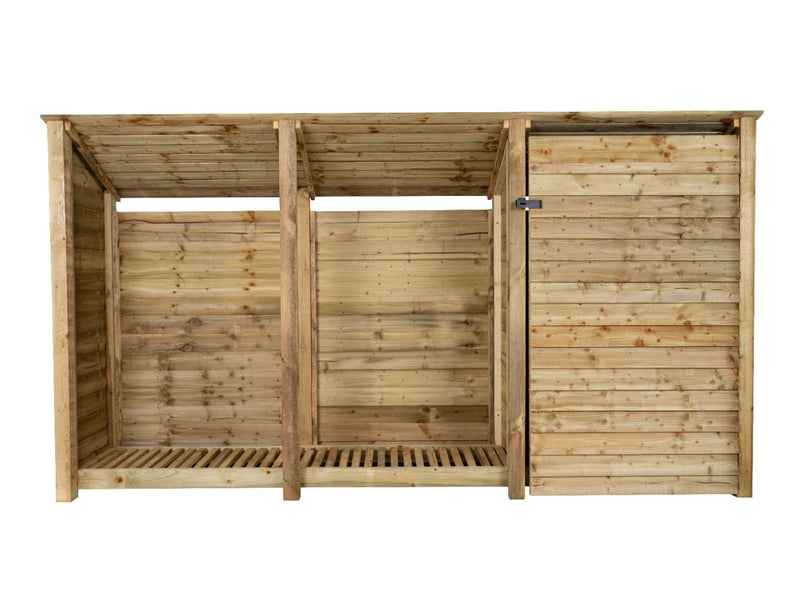
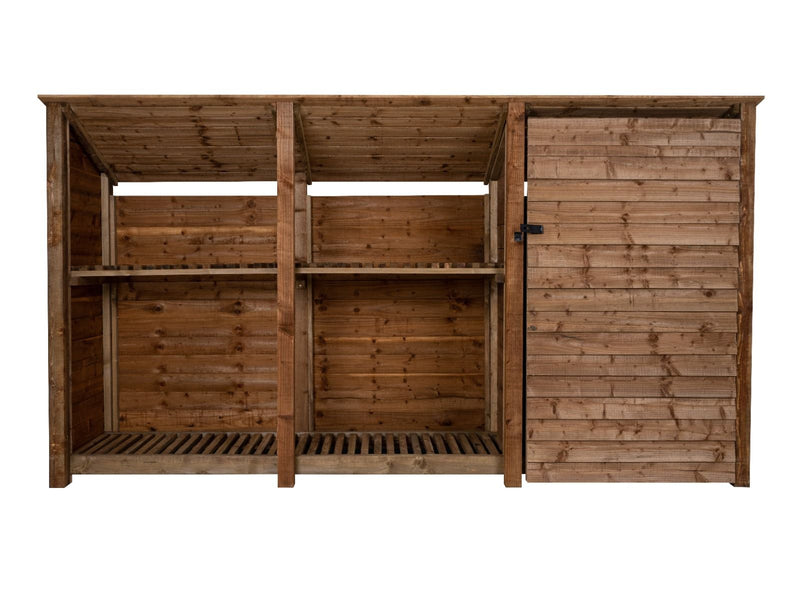
- Open sides for airflow. Slatted or louvred sides — not solid panels. Air needs to move through the woodpile.
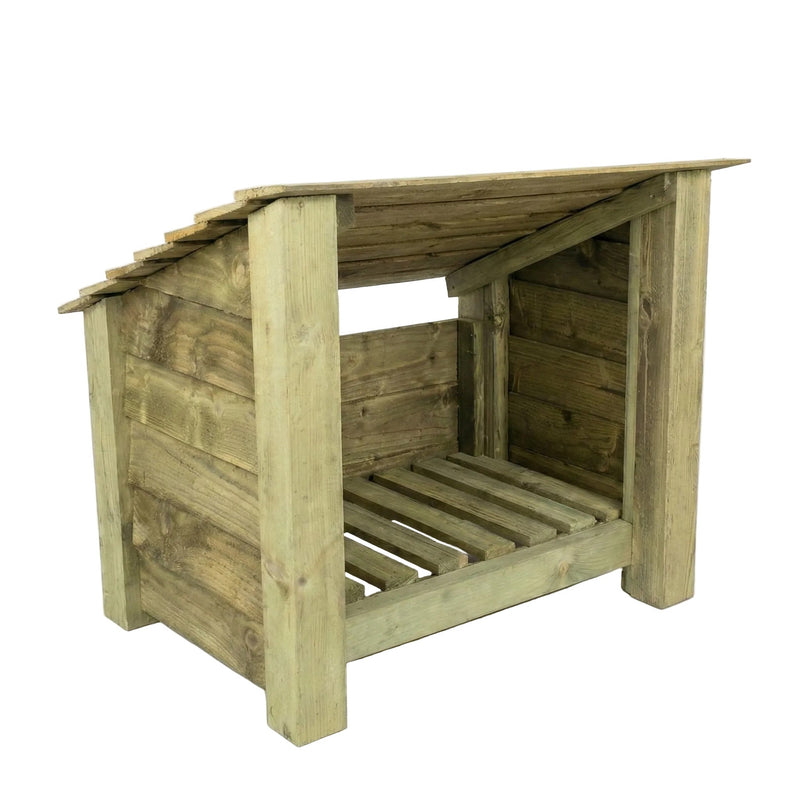
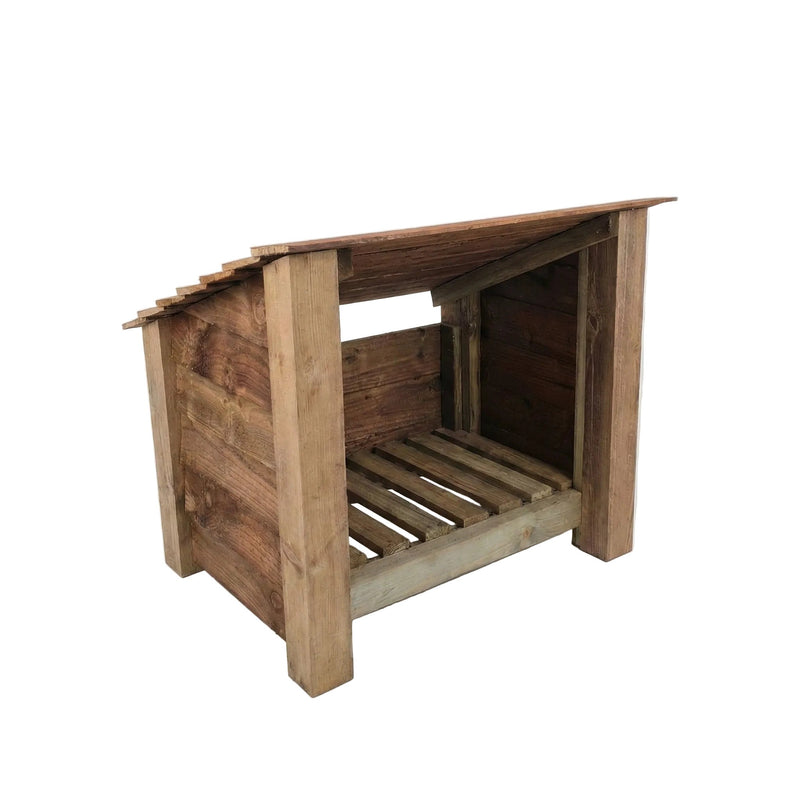
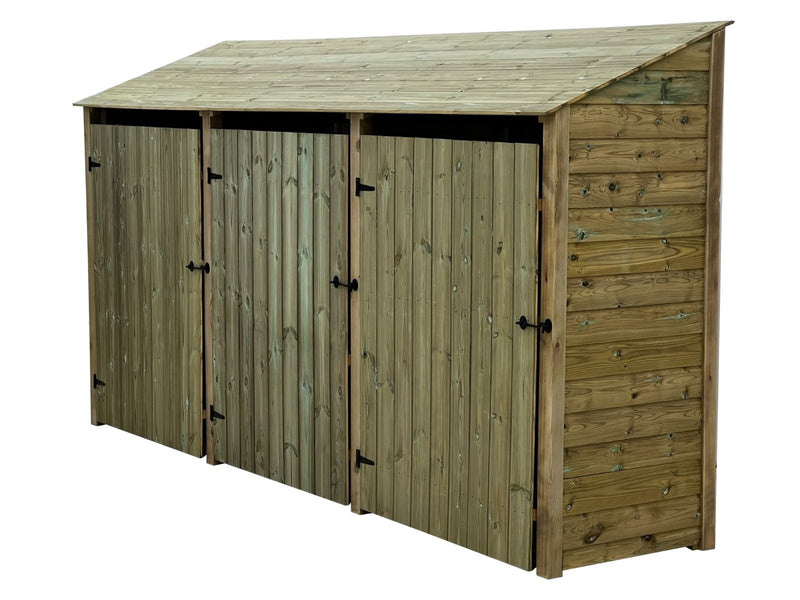
- Sloped roof, overhanging eaves. Sheds rain off without splash-back onto the logs. Pent (single-slope) roofs are simpler and work as well as apex.
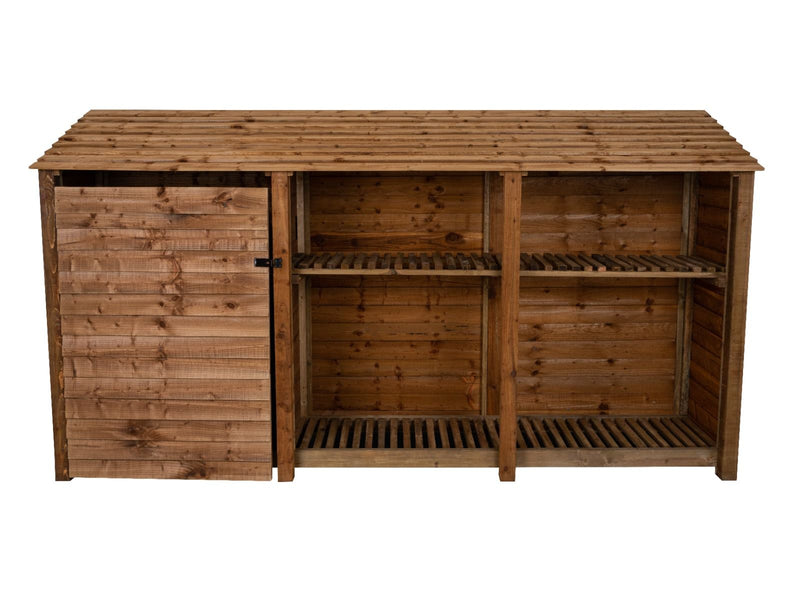
- Raised floor / bearers. Keeps logs off ground moisture. 50–100mm gap is plenty.
A log store missing any of these is mostly decorative.
Sizing: how much wood for a UK winter?
Heating estimates depend on whether the stove is primary or supplementary. Rough rules:
| Use case | Annual consumption | Store size |
|---|---|---|
| Occasional fires (10–20 per year) | 0.5–1 m³ | Small (under 1m³) |
| Regular weekend fires (50+ per year) | 1–2 m³ | Medium (1–2 m³) |
| Daily use, supplementary heat | 3–4 m³ | Large (3 m³+) |
| Daily use, primary heat source | 5–8 m³ | Multiple stores or a wood shed |
Most domestic users want 1–2 m³ of capacity — enough for a season's supply with one re-fill in late autumn. If you're buying logs by the bulk bag (typically 1.2 m³ loose, ≈0.85 m³ stacked), buy a store that fits at least one full bag.
Pressure-treated softwood vs hardwood vs metal
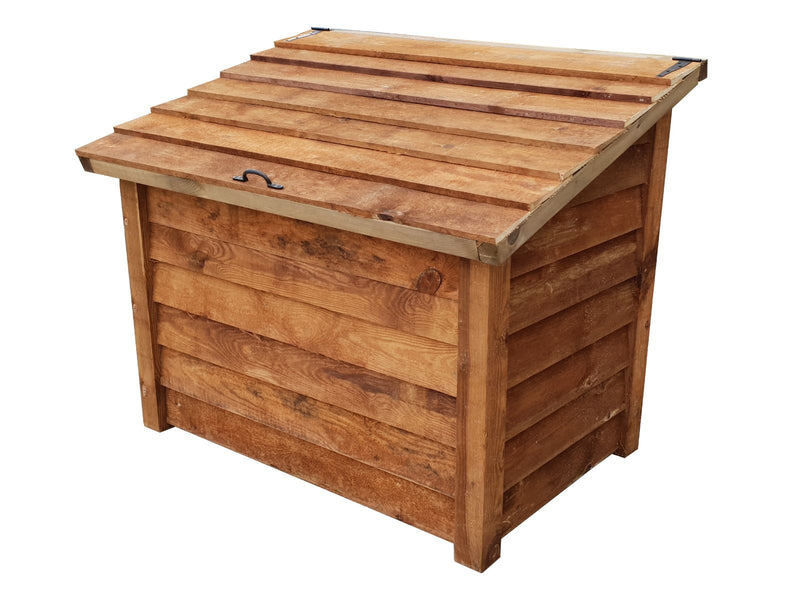
Most log stores are pressure-treated softwood — pine or spruce treated to BS 8417 Use Class 3. That's appropriate; the store sees rain but isn't structural and replacement is cheap. Look for genuinely treated timber (greenish tint when new), not just stained.
Hardwood log stores (oak, larch) are far more expensive and last 20+ years; aesthetic choice rather than necessity.
Metal log stores are uncommon but exist — galvanised steel frame with mesh or louvre sides. Lower maintenance, less aesthetic. Best for utilitarian situations.
Placement: the practical bit
Two priorities and they pull in opposite directions:
- Close to the fire. Carrying logs through the rain and snow is the part you'll do every day from October to April. Closer is better.
- In a windy spot. Logs season in airflow. The corner that's most sheltered is the worst spot for actually drying wood.
Compromise: a south-facing wall with morning sun and afternoon airflow, within 5–10 metres of the back door. Avoid against fences (no airflow) and avoid under trees (drips, debris).
Stacking: it matters more than people think
The way you stack the wood in the store affects drying time by months. The principles:
- Bark up. Bark sheds water; cut faces absorb. Stack with bark facing the sky.
- Cross-stack the ends. The first column of each layer crossed perpendicular — adds stability, lets air through the gaps.
- Leave space at the back. 5–10cm from the wall lets air circulate behind the woodpile.
- Don't stack to the roof. A few cm of gap below the roof prevents rain that does get in from sitting on the top layer.
Buying logs: what to look for
Since 2021, all firewood sold in volumes under 2 m³ in England must be Ready to Burn certified — moisture content under 20%. Buy from local suppliers where possible (less transport, often more honest about species). Bulk bag (~1.2 m³) and dumpy bag (~1 m³) are the common units.
Avoid skip-bag wood from unknown sources. It's frequently un-seasoned, sometimes treated (don't burn pressure-treated wood — it releases nasty stuff), and often a mix of species in unpredictable conditions.
Maintenance
Pressure-treated softwood stores need a coat of preservative every 2–3 years to maintain water resistance and rot protection. The treatment penetrates a few millimetres only — once the surface is weathered, you're protecting the rest. Use a shed/garden building grade product, not interior wood stain.
Inspect the bearers / floor every spring. They take the worst of the moisture.
Delivery
Log stores ship from a UK warehouse, usually 5–7 working days, free over £100. Smaller units (under 1m wide) ship by courier; larger ones come pallet-direct. Assembly is typically 30–60 minutes with two people.