
Bike storage that actually keeps your bikes safe and dry
UK bike theft is up. The Office for National Statistics records around 75,000 reported bike thefts a year, and unreported numbers are higher. Most of those thefts happen at home — overnight, from gardens, sheds and unsecured outdoor storage. If you've spent £600+ on a bike (and most of us have), the storage matters.
This page covers what actually works: lockable storage with proper hasps, ground anchors where insurance demands it, and the practical detail of fitting it all into a UK garden.
Three ways to store a bike outside
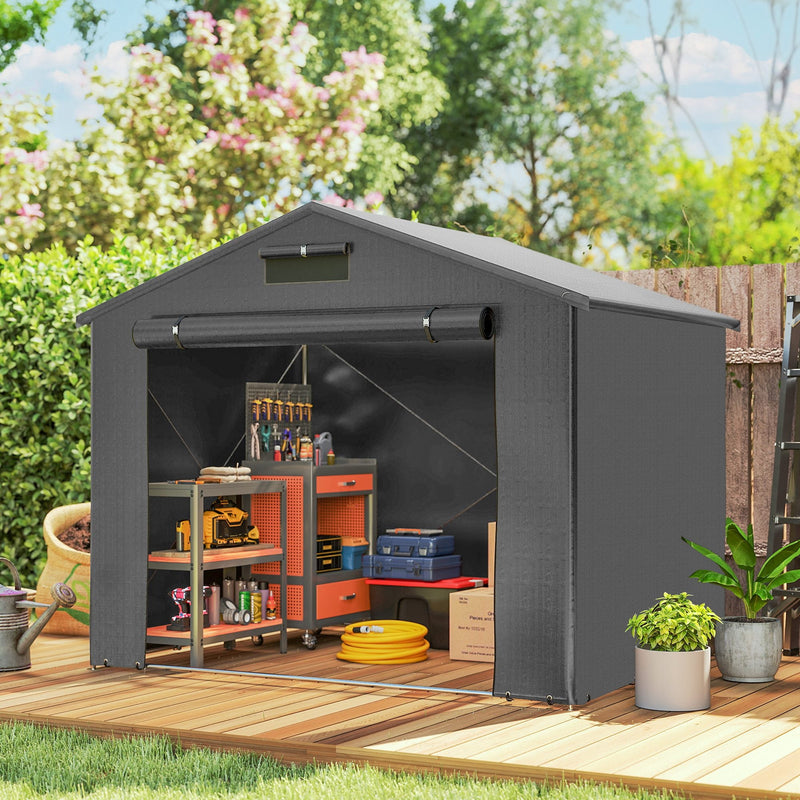
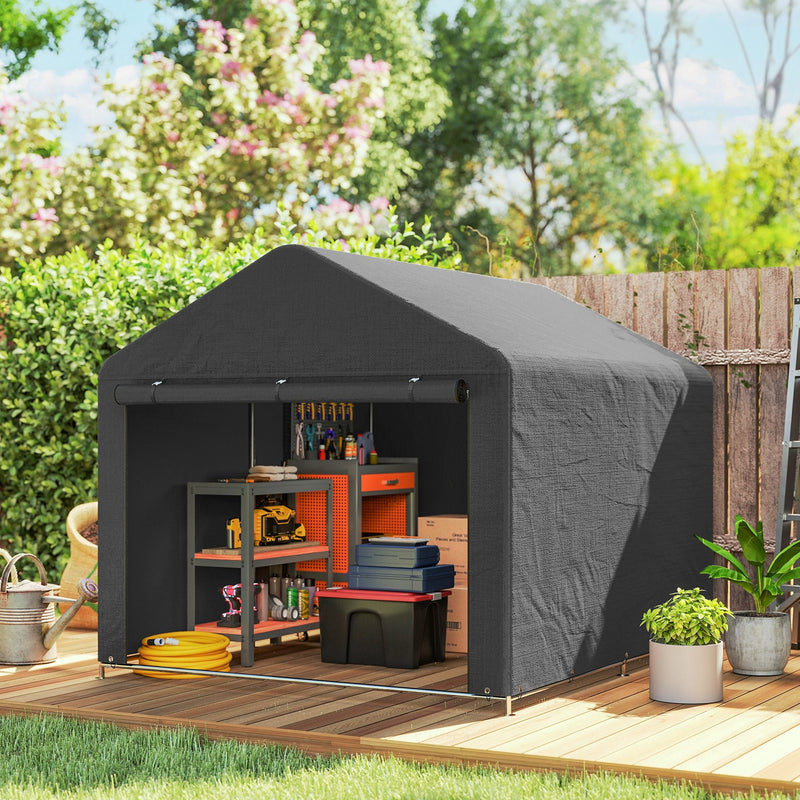
Bike sheds are walk-in or step-in structures sized for 1–4+ bikes plus accessories. Best if you ride often and want quick access. Browse bike storage sheds from compact 1-bike units up to family-size 4-bike walk-ins.
Bike storage boxes are low-profile lift-lid units, typically holding 1–3 bikes. Best for narrow side-returns and front gardens where a shed would be too tall. Look at lockable bike boxes for insurance-rated options.
Metal bike storage sits at the toughest end — galvanised steel construction, Sold Secure-rated locking, designed specifically for high-value bikes. Heavier, more secure, more expensive. Browse metal bike storage for e-bikes and pedigree builds.
Sizing: how many bikes will fit?
Bike storage capacity is the spec manufacturers most often inflate. The honest version:
| Quoted capacity | Reality |
|---|---|
| "1 bike" | 1 adult bike. Yes. |
| "2 bikes" | 2 adult bikes only if both have flat handlebars. Add drop bars or a kid trailer and you're squeezed. |
| "3 bikes" | 2 adult + 1 child, or 3 adult bikes only if at least one is mounted vertically. |
| "4+ bikes" | Walk-in shed territory. Standard 4-bike sheds work for 4 adult bikes if you alternate front/back. |
If in doubt, size up. The difference between "barely fits" and "easy to use" is the difference between storage you'll use daily and storage you'll resent.
Security: what insurance companies actually require
Most UK home insurance policies cover bikes up to a certain value (often £350–£1,000) under contents insurance, and require:
- The bike is stored in a locked, fixed structure (a shed counts; a bike rack on a fence does not)
- The lock used is Sold Secure rated — Bronze for low-value bikes, Silver for £500–£1,500, Gold for above
- For high-value bikes (e-bikes, road bikes over £2,000), a ground anchor + chain in addition to the shed lock
Check your policy schedule. Some insurers require a specific brand of anchor; some won't pay out at all on bikes stored in plastic units regardless of locks. Our lockable bike storage range filters specifically for products that meet typical insurer requirements.
Sold Secure ratings explained
Sold Secure is the UK's independent security testing body. They rate locks, hasps and storage units against a standard set of attack tools and times. Three tiers:
- Bronze — withstands hand tools (3 minutes). Suitable for bikes under £500.
- Silver — withstands light power tools (3 minutes). Suitable for bikes £500–£1,500.
- Gold / Diamond — withstands heavy power tools (5 minutes / 5+ minutes). Required by most insurers for e-bikes and road bikes over £2,000.
The lock is the weak point on most setups, not the storage. A Gold-rated D-lock through frame, wheel and ground anchor is dramatically more secure than just locking the storage door.
Indoor vs outdoor — when to use each
If you have garage space, that's nearly always better than outdoor storage. Lower humidity, no UV exposure, easier to charge an e-bike battery indoors over winter. The exception is e-bikes with the battery removed — many insurers require batteries to be stored separately from the bike.
For outdoor storage, the priorities flip:
- Waterproof construction (keeps rust off chain/derailleur/cassette)
- Ventilation (prevents condensation)
- Lockable, with a hasp that takes a Sold Secure-rated lock
- Ground-anchorable for high-value bikes
E-bikes: the special case
E-bikes are increasingly the fastest-stolen category in UK cities. They're heavy (so harder to grab and ride off without effort), but valuable enough that organised thieves come prepared. Three rules:
- Battery indoors, bike outside — most insurance schedules require this, and it dramatically reduces theft attractiveness
- Gold-rated D-lock + chain through frame and wheel — minimum
- Ground anchor bolted into concrete (not into the shed itself) — without this, thieves lift the bike and shed onto a van
Where it goes — the planning bit
UK gardens often don't have an obvious place for bike storage. Three patterns work:
- Side return — narrow strip between house and fence. Use a low-profile box or a slim shed.
- Front garden / driveway — convenient for daily use. Check the unit isn't visible from the street (a security risk) and that any HOA / freeholder rules permit it.
- Back of shed / against the fence — where space allows. Make sure the unit isn't sitting in a perpetually wet corner.
Practical specs to look for
- Internal length: 195cm minimum for adult bikes, 220cm comfortable
- Internal width: 75cm per bike if storing parallel; 90cm+ for offset
- Door style: lift-lid is fine for daily-use; gas-strut hinges much better than plain
- Floor: integrated floor with drainage channels > no floor at all
Delivery, returns, the standard stuff
All bike storage on this site ships from a UK warehouse. Larger units (sheds, walk-ins) come pallet-direct to the kerbside — plan for two people on delivery day. Standard delivery is 5–7 working days, free over £100. Full 14-day returns under UK Consumer Contracts Regulations.