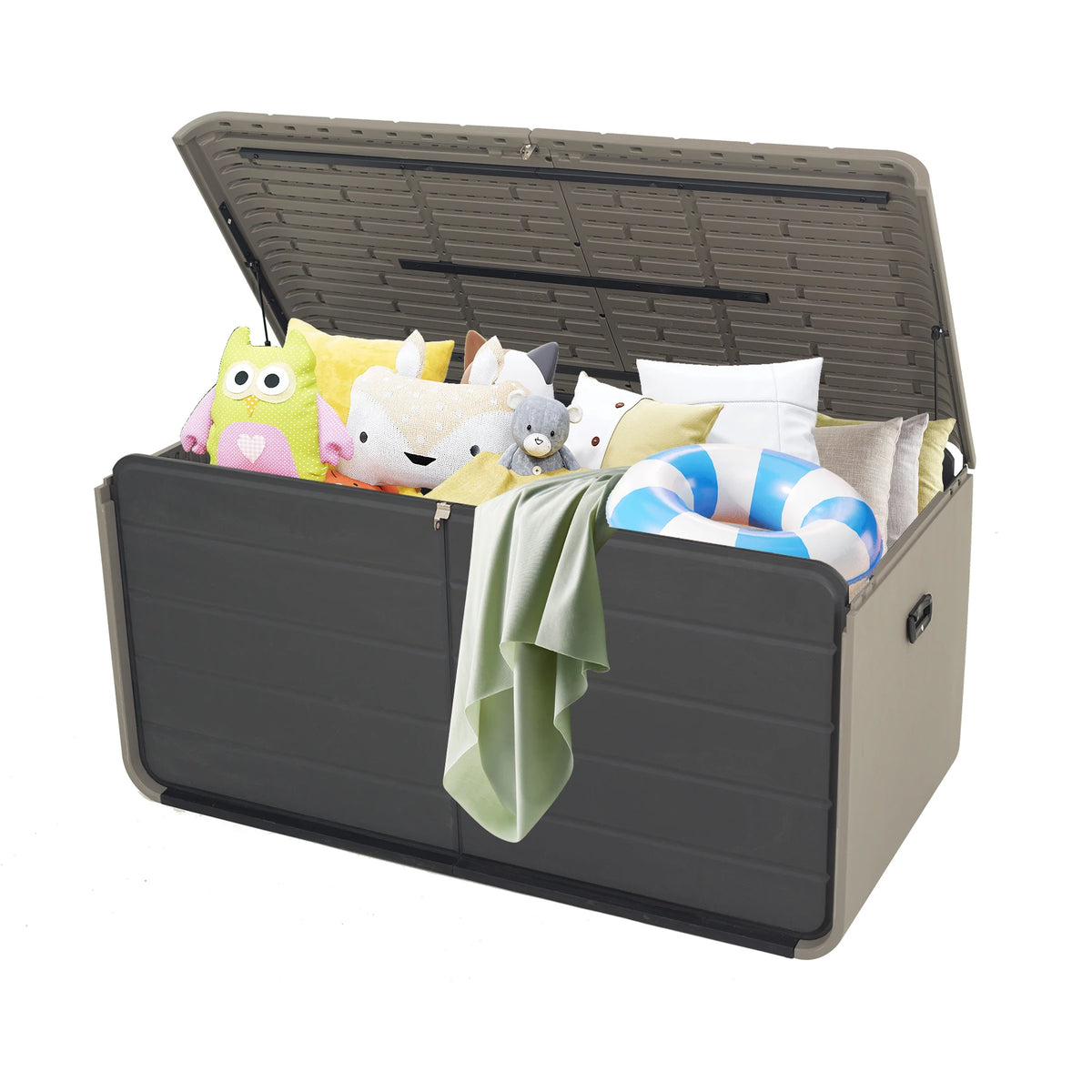
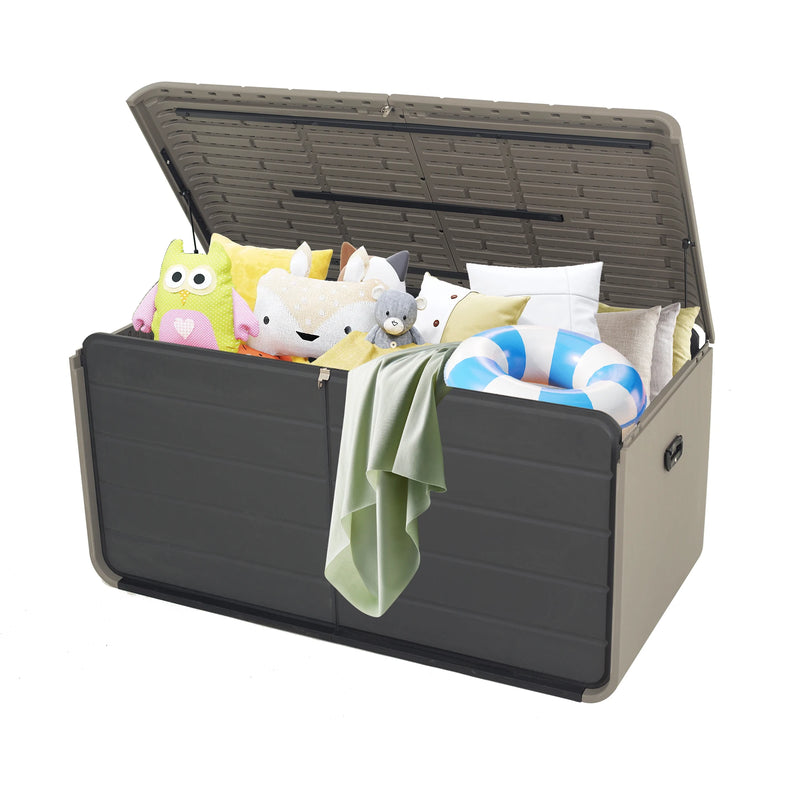
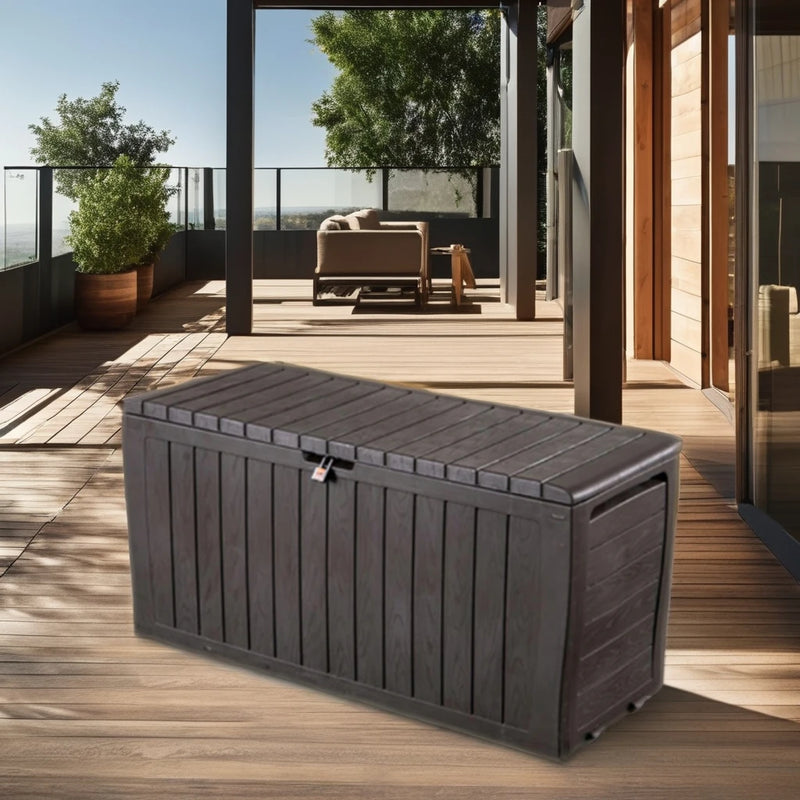
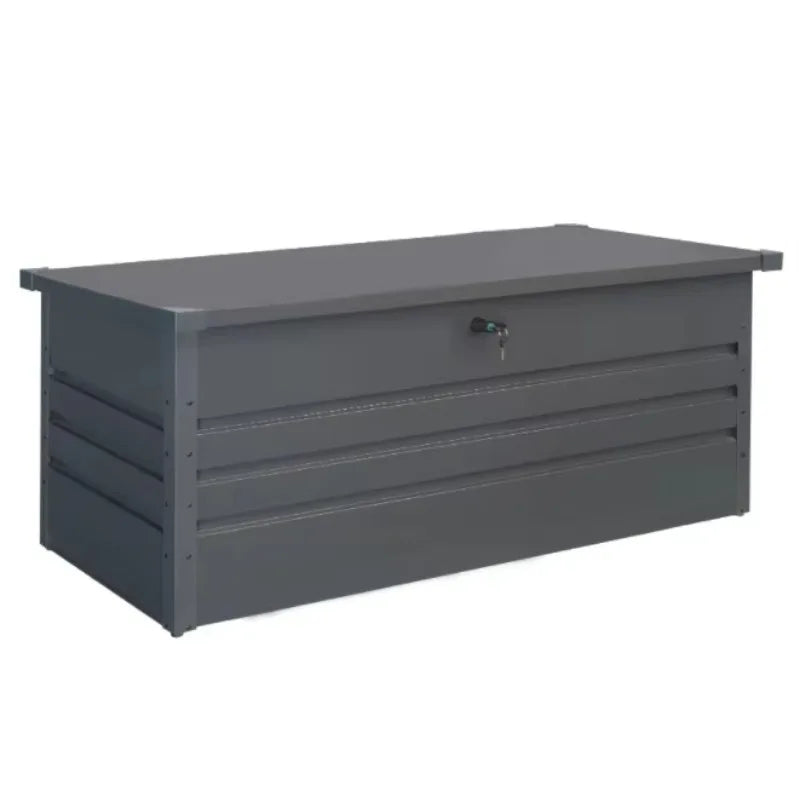
Large garden storage boxes — 500L and up, the small-shed alternative
At 500L+, you're in the territory of "is this still a box, or should it be a shed?" The honest answer depends on what you're storing and how often you'll access it. Boxes are cheaper, easier to deploy and don't need foundations. Sheds are walk-in, more weatherproof, more secure, and significantly more expensive.
The boxes here are sized for serious storage: full patio sets including parasols and side tables, multiple bikes, fold-flat garden furniture, and the kind of accumulated garden equipment that fills a normal box within a season.
Capacity reality vs marketing
"500L" in marketing typically means "500L of internal volume measured to the brim". The usable volume is closer to 400L, because:
- You don't pack to the lid (can't get the bottom items out)
- Items have shape — cushions and BBQ kit don't tessellate
- 10cm of dead space at the bottom for ventilation/drainage
Shopping rule: aim for 30% more capacity than your stuff measures stacked. A 500L spec for 400L of actual stuff is usable; 500L for 500L of stuff is not.
Sizing milestones
| Capacity | What fits comfortably |
|---|---|
| 500–700L | 4–6 seat patio set cushions + parasol cover + BBQ accessories |
| 700–1000L | Above + an adult bike OR a full garden tool set |
| 1000–1500L | Two adult bikes (offset) OR full patio set + bike + tools |
| 1500L+ | Three+ bikes, fold-flat garden furniture, ride-on mower accessories |
At 1500L+ you should genuinely consider a small shed instead — same price band, walk-in access, more secure, more weatherproof.
The dual-access decision
Above 600L, top-only access becomes painful. You're standing on a chair or stepping inside the box to retrieve bottom items. The fix is a unit with both lid and front-door access:
- Lid only — fine up to 500L
- Lid + front swing doors — much better for 600L+; lets you walk items in
- Walk-in cabinet style — for 1000L+; effectively a small cupboard
Pay the £30–50 extra for dual access. You'll thank yourself every week.
Where to put a large box
Large boxes need site preparation more than small ones do. Three priorities:
- Level, solid base — paving flags, concrete slab or properly-bedded gravel. Uneven ground will warp the box, then the lid won't seal.
- Drainage — water shouldn't pool against the box. A slight slope away helps.
- Access — clearance to open the lid and front doors. A box wedged against a wall with no swing room is half-useless.
Materials at scale
Large plastic boxes (UV-stabilised resin) save weight — 40–60kg empty for a 1000L unit, vs 80–120kg for galvanised metal. That makes a meaningful difference at delivery and during seasonal cleaning.
Large metal boxes are more secure and longer-lived but heavy, hot in summer, and noticeably more industrial-looking. If aesthetics are a factor, plastic or wood-clad metal hybrids look better.
Wooden large boxes are rarer and pricier but a genuine feature in a garden — think outdoor cabinet rather than utility storage. Maintenance load is real.
Security on large boxes
Larger boxes are bigger theft targets — especially if they hold bikes or tools. Two practical measures:
- Sold Secure-rated lock + hasp on the box itself
- Ground anchor bolted into hard standing for the high-value contents (bike chained to anchor inside the box; thieves can't lift the box)
For dedicated bike storage at this scale, see bike storage sheds.
Delivery and assembly
Large boxes ship pallet-direct to UK mainland addresses. The driver delivers to the kerbside; you'll need help to move it inside the property. Plan for two people minimum on delivery day. Assembly is typically 60–90 minutes with two people, basic hand tools.
Free over £100, typically 5–7 working days. Full delivery breakdown.
For the broader range see storage boxes; for sub-500L options see small storage boxes.